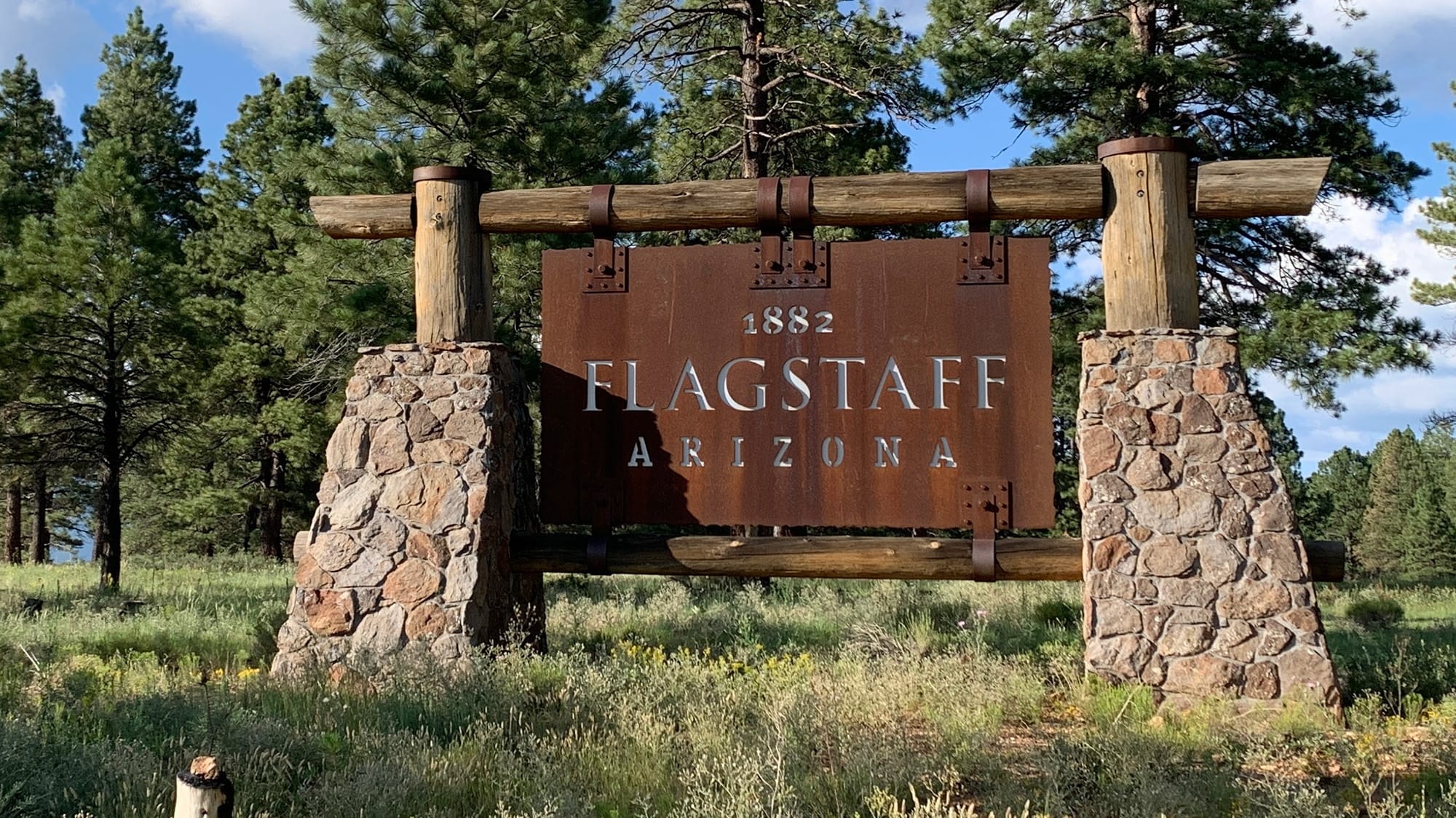
Stop #7A Flagstaff, AZ
Flagstaff, Arizona, is a very interesting city. There is an abundance of things to see and do, It is home to the Lowell Observatory and has many Route 66 historical signs. Flagstaff to the Grand Canyon South Rim is about 80 miles and takes roughly 1.5 hours. I will be blogging about the Grand Canyon in Stop #7C. There is also Walnut Canyon which is only 12 minutes and 8.5 miles from Flagstaff. I will be covering it in Stop #7B.
We also had a unplanned diversion to Gallup, New Mexico while on our way to Albuquerque. That will be covered in Stop #7D.
Near Flagstaff
The Cameron Trading Post is one of the oldest continuously operating trading posts in the American Southwest. It takes about 1 hour and 10 minutes which is about 53 miles from Flagstaff. It was founded in 1916 by brothers Hubert and C.D. Richardson after a suspension bridge over the Little Colorado River was built in 1911. The suspension bridge is bypassed now, but can be viewed from the parking lot.
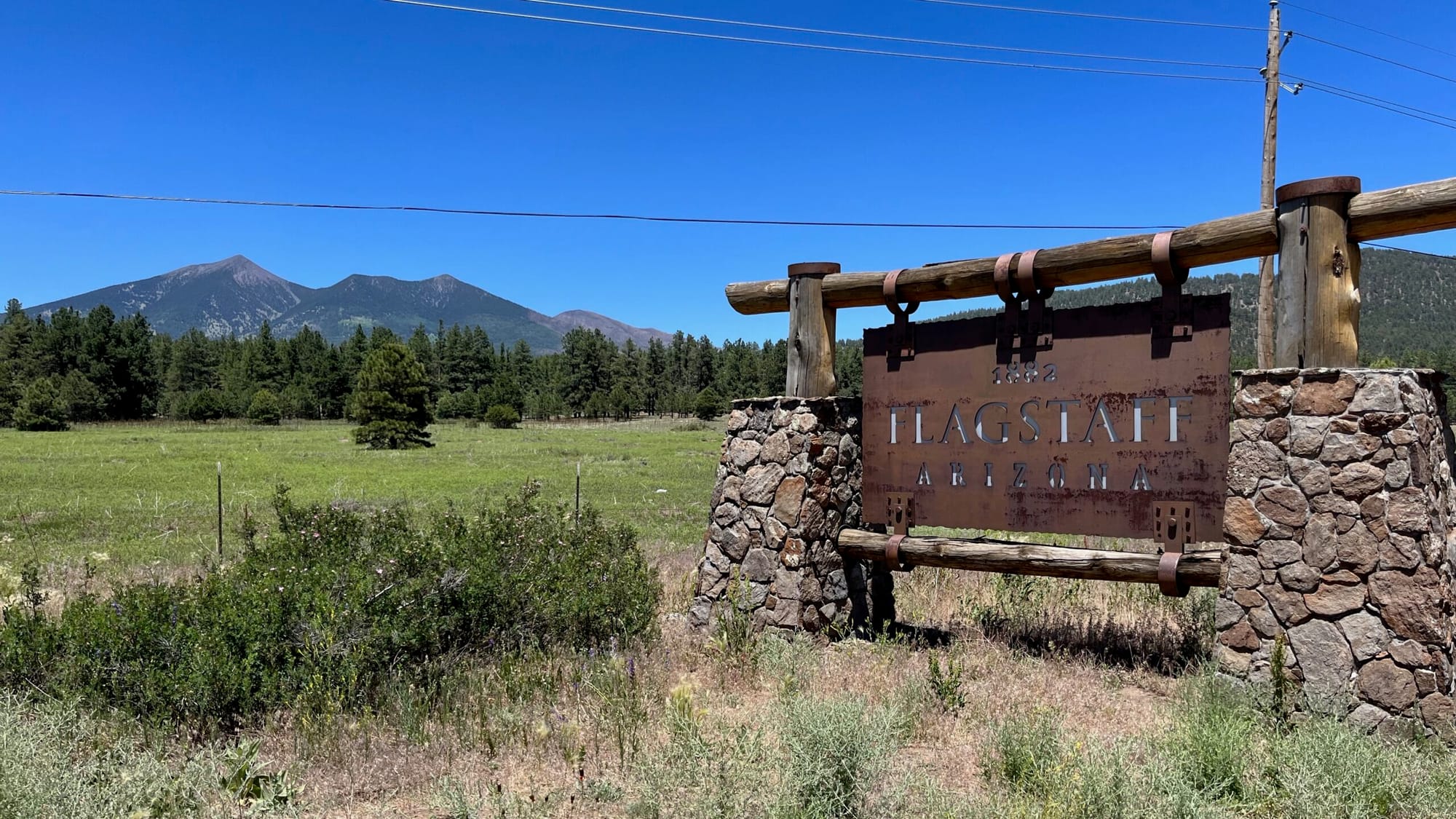
A Brief History of Flagstaff
The area was known before the town developed as Antelope Spring, referring to a spring near what is now Mars Hill. The commonly accepted story dates the name to July 4, 1876. A group of emigrants from Boston camped in the area while traveling west. To celebrate the United States' centennial, they stripped the branches and bark from a tall ponderosa pine, turned it into a flagpole, and raised an American flag. Eventually the settlement took the name Flagstaff.
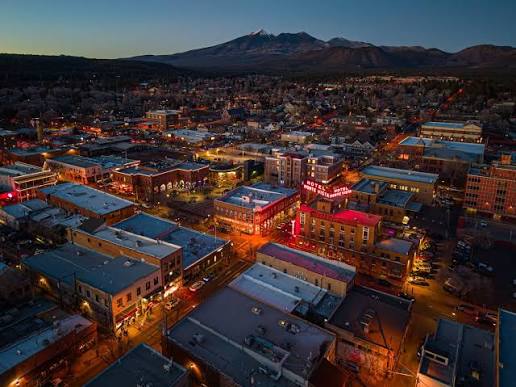
Flagstaff sits at roughly 7,000 feet above sea level. Historical sources give the elevation as about 6,935 feet, while modern sources commonly round it to 7,000 feet. The city sits near the base of the San Francisco Peaks, whose highest summit, Humphreys Peak, reaches 12,633 feet and is the highest point in Arizona.
The region has a much older history than the 1800s. Indigenous peoples—including the Sinagua, Ancestral Puebloan/Anasazi, and Cohonina—lived throughout the region long before Euro-American settlement. Nearby archaeological sites such as Wupatki and Walnut Canyon show how substantial these ancient communities were.
In the 1850s, the U.S. Army explored and surveyed routes through the region. Edward Beale's wagon road between New Mexico and California passed near the future Flagstaff, helping establish a transportation route through northern Arizona.
Thomas F. McMillan established a permanent settlement in 1876, building a cabin and developing a sheep operation. Other ranchers followed because the area offered grass, water, and timber. The biggest transformation to Flagstaff came with the Atlantic & Pacific Railroad. Construction began westward from Albuquerque in 1880, and the railroad reached the Flagstaff area in 1882.
Flagstaff became an incorporated town in 1894. It later became the Coconino County seat in 1891, and was incorporated as a city in 1928.
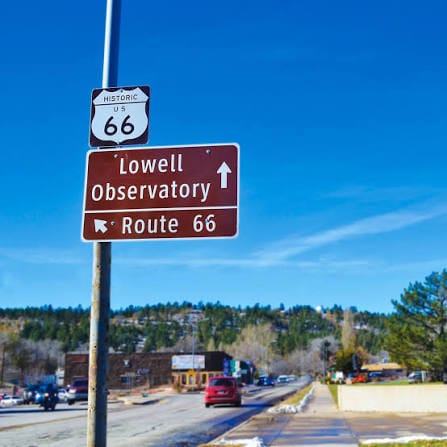
Lowell Observatory
It is located at 1400 W Mars Hill Rd, Flagstaff, AZ 86001.
.jpg)
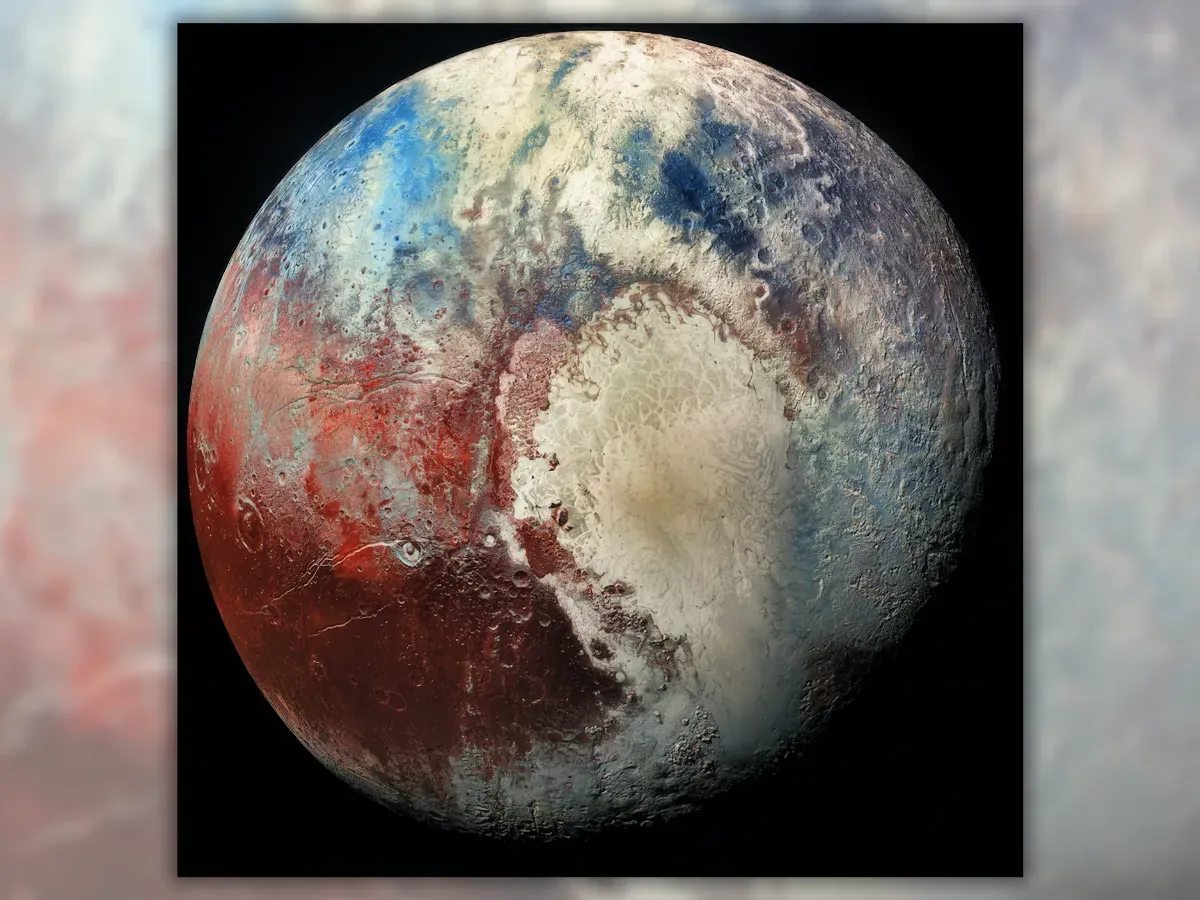
Lowell Observatory is one of America’s oldest astronomical observatories. It was founded in 1894 by Percival Lowell in Flagstaff, Arizona. In 1930, astronomer Clyde Tombaugh discovered Pluto while working at Lowell Observatory.
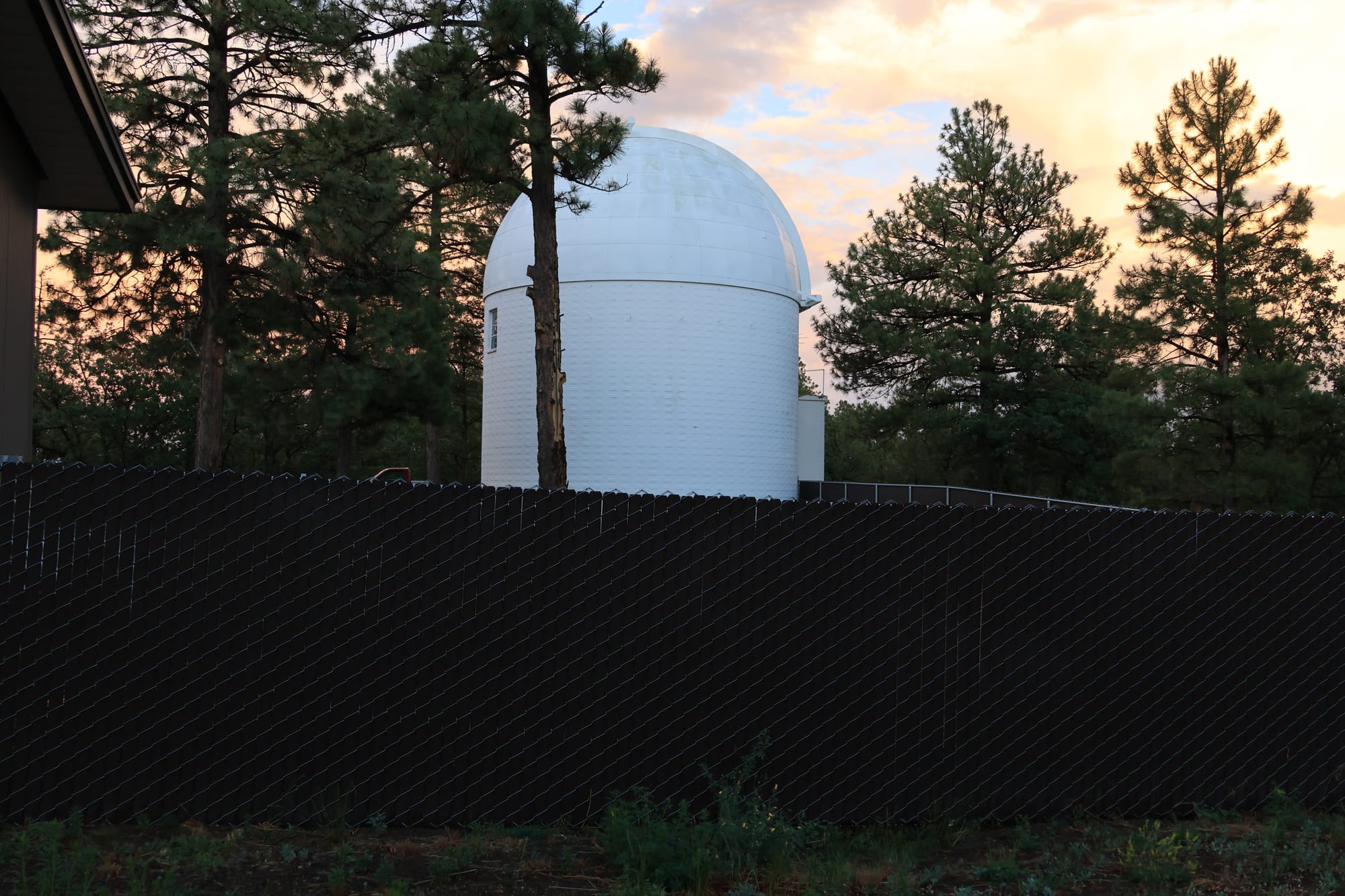
Percival Lowell became fascinated with Mars and believed there might be another planet beyond Neptune, which he called “Planet X.” After his death in 1916, the search eventually resumed, and the observatory commissioned a new telescope specifically for the project. The 13-inch Lawrence Lowell Astrograph was built in 1928–1929 and installed in what is now known as the Pluto Discovery Dome. In 1929, young astronomer Clyde Tombaugh joined Lowell Observatory and was assigned the painstaking task of photographing the night sky and comparing photographic plates taken on different nights.
On February 18, 1930, Tombaugh identified an object that moved against the background stars. That object was later named Pluto, making Lowell Observatory the place where the ninth planet was discovered. Pluto was reclassified as a dwarf planet in 2006, but its discovery remains one of the most famous events in American astronomy.
Night Skies in Flagstaff
Lowell Observatory helped lead the effort to protect Flagstaff's night skies. In 1958, concerns about searchlights and artificial lighting contributed to the creation of one of the world's earliest outdoor lighting ordinances specifically designed to protect astronomical observing.
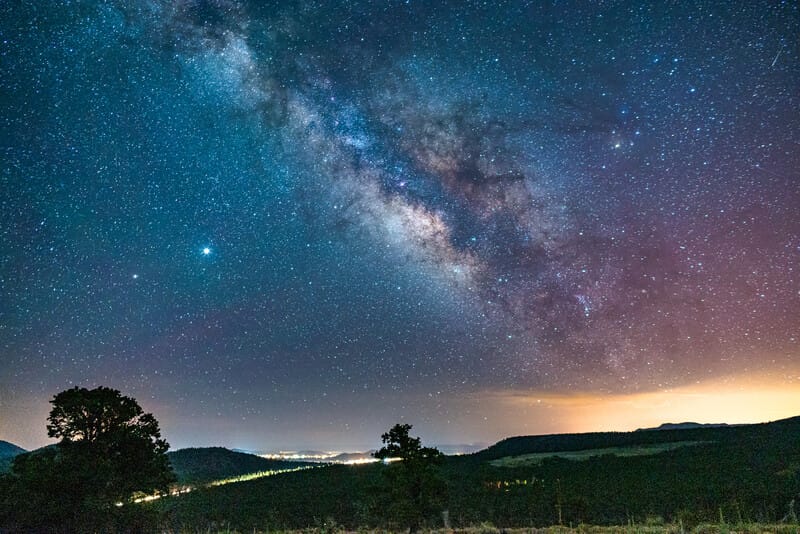
On October 24, 2001, Flagstaff became the world's first International Dark Sky City, recognizing its long-standing commitment to protecting the natural night sky. The designation means that Flagstaff takes deliberate steps to limit unnecessary light pollution through outdoor-lighting regulations and community practices. The goal isn't simply to help astronomers—it also preserves the night sky for residents, visitors, wildlife, and future generations.
In 2025, Flagstaff was also named Dark Sky Place of the Year, recognizing its continued efforts to protect its nighttime environment.
Flagstaff and Route 66
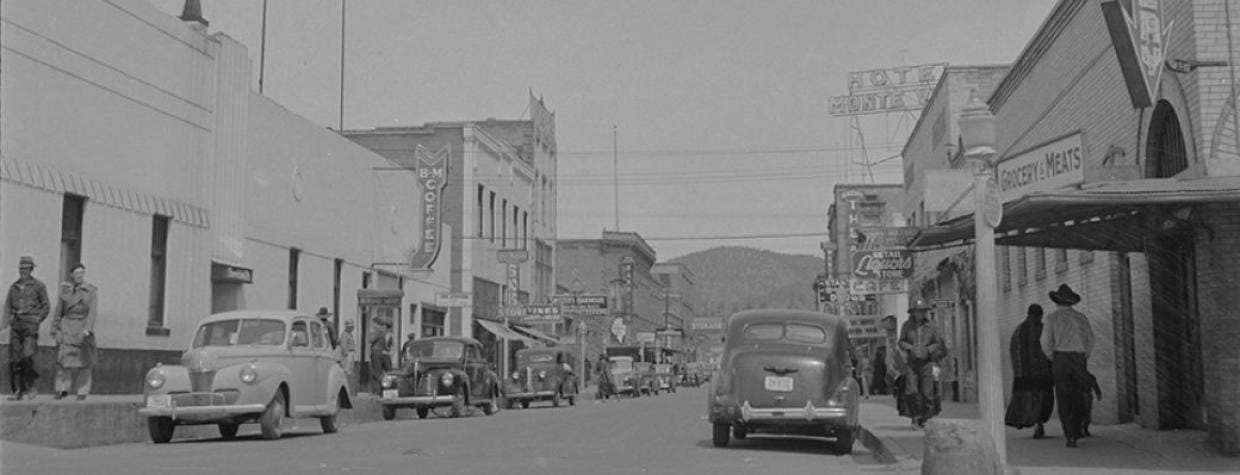
Before Route 66 was officially established in 1926, the road through Flagstaff was part of the National Old Trails Road, one of the country's earliest transcontinental auto routes. When U.S. 66 was created, Flagstaff became a major stop for travelers heading to the Grand Canyon and California.
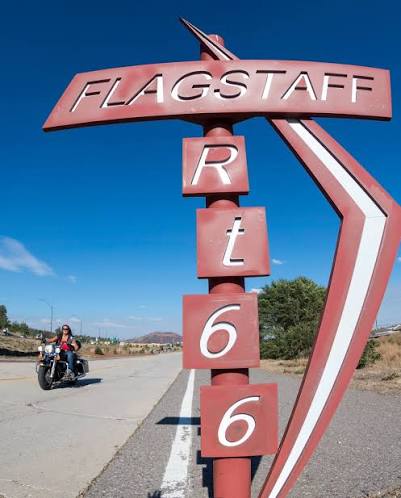
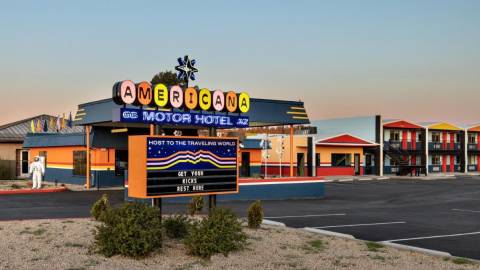
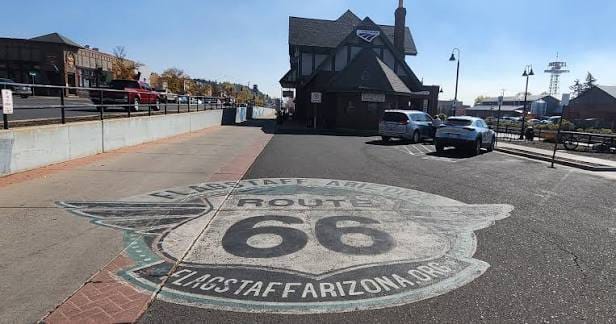
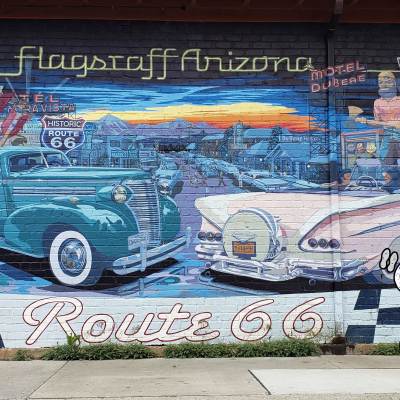
The 1926 route passed through downtown, and portions of both the original 1926 alignment and a 1934 reroute can still be followed today. Flagstaff is the highest city on Route 66. It is surrounded by ponderosa pine forests rather than desert.
The most important historical name associated with I-40 is U.S. Route 66.Before the Interstate Highway System, Route 66 was the famous highway connecting Chicago to Los Angeles. When I-40 was constructed, it replaced large portions of Route 66, particularly through Arizona, New Mexico, Texas and Oklahoma. The Interstate Highway System was authorized in 1956 under President Dwight D. Eisenhower. Construction of I-40 occurred over several decades, with different portions opening at different times.The highway was designed for high-speed, long-distance travel, bypassing many of the small towns that Route 66 had served.
That's why you'll see signs such as "Historic Route 66" alongside I-40. In many places, the old Route 66 survives as a frontage road, local highway, or preserved historic segment.
This dramatically changed communities along the old highway. Towns that depended on travelers stopping for gas, food, motels and roadside attractions sometimes lost much of that traffic when I-40 bypassed them.That's one reason the old Route 66 towns are so interesting today.
Flagstaff, Arizona, is one of the highlights of Historic Route 66. Unlike many towns where the old highway has disappeared, the original route still runs through the heart of downtown, with preserved neon signs, historic motels, and railroad-era buildings.
Cameron Trading Post
Although it is not on Route 66, it has long been a favorite stop for Route 66 travelers because it's about 30 miles northeast of the Grand Canyon South Rim entrance and lies on U.S. Highway 89, a popular side trip from Flagstaff and Williams.
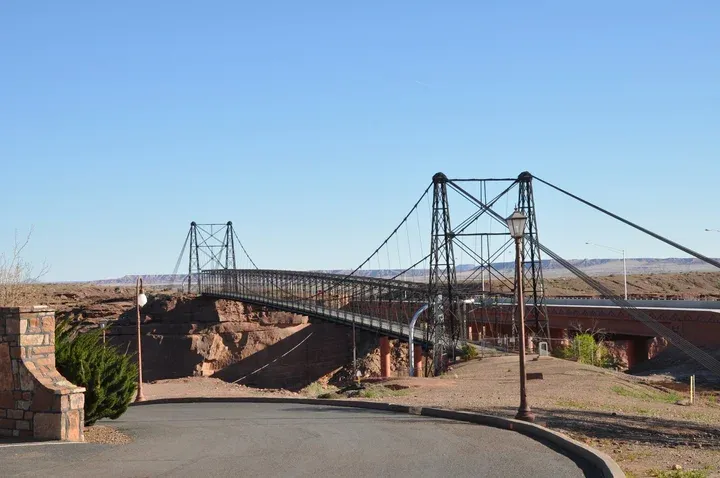
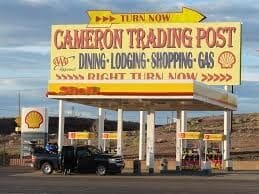
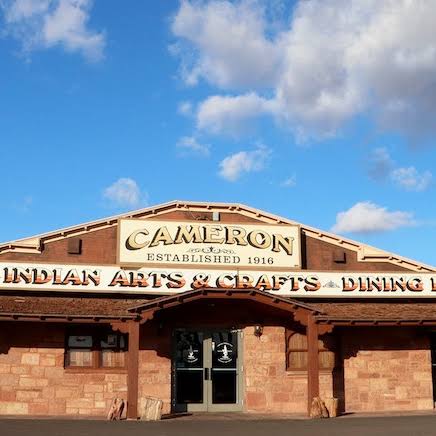
The trading post today includes:
- A large gallery featuring authentic Navajo, Hopi, and Zuni jewelry, rugs, pottery, and baskets.
- A motel with Southwest-style rooms.
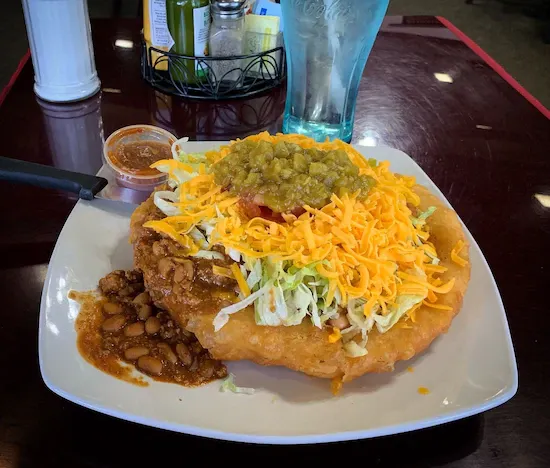
- A restaurant famous for its Navajo tacos and homemade pies.
- Scenic views overlooking the Little Colorado River Gorge.
Historically, the trading post served as more than a store. Navajo and Hopi families often traveled for days by wagon or horseback to trade wool, blankets, livestock, and handmade crafts for food and household goods. The owners became trusted intermediaries, helping local residents navigate legal and business matters while providing lodging and meals to visitors.
The items available for purchase are authentic and reasonable.
We visited the trading post and had the Navajo tacos. Mmmm it was delicious!
Conclusion
Flagstaff, Arizona, was a great place to visit. There is so much to see and do. We highly recomment Flagstaff as a must see destination.
More in
Stop #7B Walnut Canyon
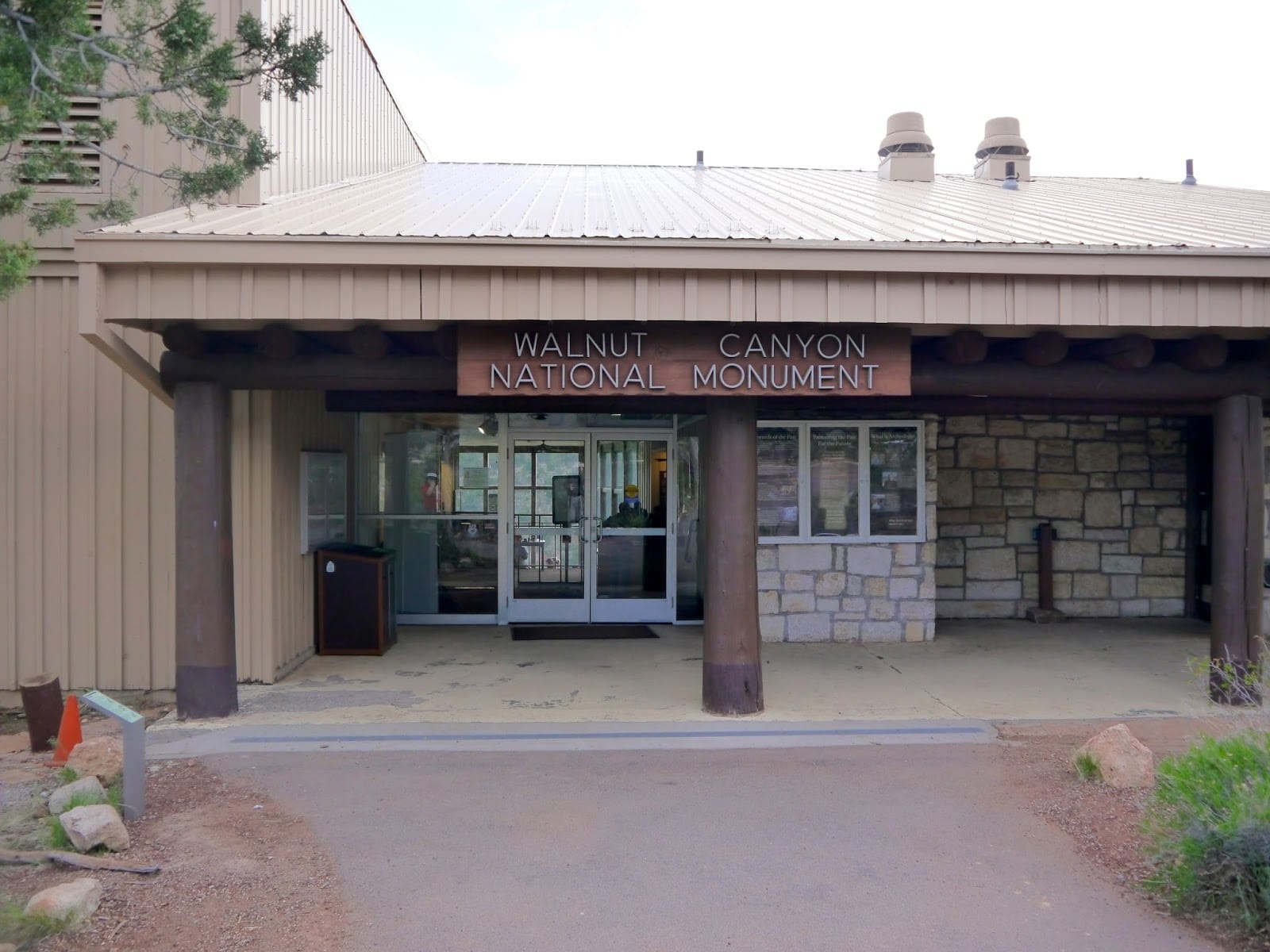
Recognizing the importance of preserving these resources, President Woodrow Wilson established Walnut Canyon as a national monument on November 30, 1915, protecting its archaeological sites for future generations.