
Great Southern Metro Park Columbus: Trail Guide & Map 2026
About 2 miles of trails · Flat terrain · 1–2 hours · Easy · Year-round · Dogs welcome on leash · Free · Open daily 7:30 a.m. to dark
Columbus just got a brand-new Metro Park, and it might be the most unexpected one in the system. Great Southern Metro Park opened on April 1, 2026, bringing 70 acres of trails, restored prairie, river access, and a full-blown obstacle course to the South Side. It's the 21st park in the Columbus and Franklin County Metro Parks system, and it fills a gap that residents south of I-270 have felt for a long time.
The park sits right along the Scioto River, tucked behind the Great Southern Shopping Center off South High Street. You've probably driven past this stretch a hundred times without giving it a second thought. But there's a surprisingly wild riverfront back here, complete with prairie grasslands, wetlands, an old canal corridor you can walk, and exposed geological layers dating back to the last ice age. If you live on the South Side, this is your backyard park now. If you don't, it's worth the drive.
Getting there
The easiest approach is from South High Street, US-23. Head south from downtown, pass under I-270, and turn west onto Williams Road. The park entrance and main parking lot are on your right. Coming from I-270, take the South High Street exit and head north briefly; Williams Road is less than half a mile from the interchange. You can also reach the park from Hirst Drive on the north side.
Parking: a paved lot at the Williams Road entrance serves as the main trailhead, with overflow parking along Hirst Drive. Free, like all Metro Parks. GPS: 39.8915, -83.0010. Open daily, 7:30 a.m. until dark. No entrance fee, no reservations.
The location sits between the Scioto River to the west, the shopping center to the east, and I-270 to the south. Don't let the commercial surroundings fool you. Once you're fifty yards down the trail, the city noise drops away and the river takes over.
The trails
Great Southern isn't backcountry wilderness, and it isn't pretending to be. What you get is a well-designed network of paved and natural-surface trails through prairie, woodland, and river corridor, all within easy reach of south Columbus neighborhoods that haven't had a Metro Park nearby until now.
Paved multi-use trail
Flat, smooth asphalt. The main paved trail forms the backbone of the park: wheelchair accessible, stroller-friendly, good for walking, jogging, or a casual bike ride. It winds through open prairie with clear sightlines to the Scioto and connects everything, from the parking area to the overlook deck, playground, and obstacle course. You'll cover about a mile on the paved route alone. Plan 30 to 45 minutes for a casual walk, longer if you stop at the overlook or detour to the fitness stations.
Canal Trail
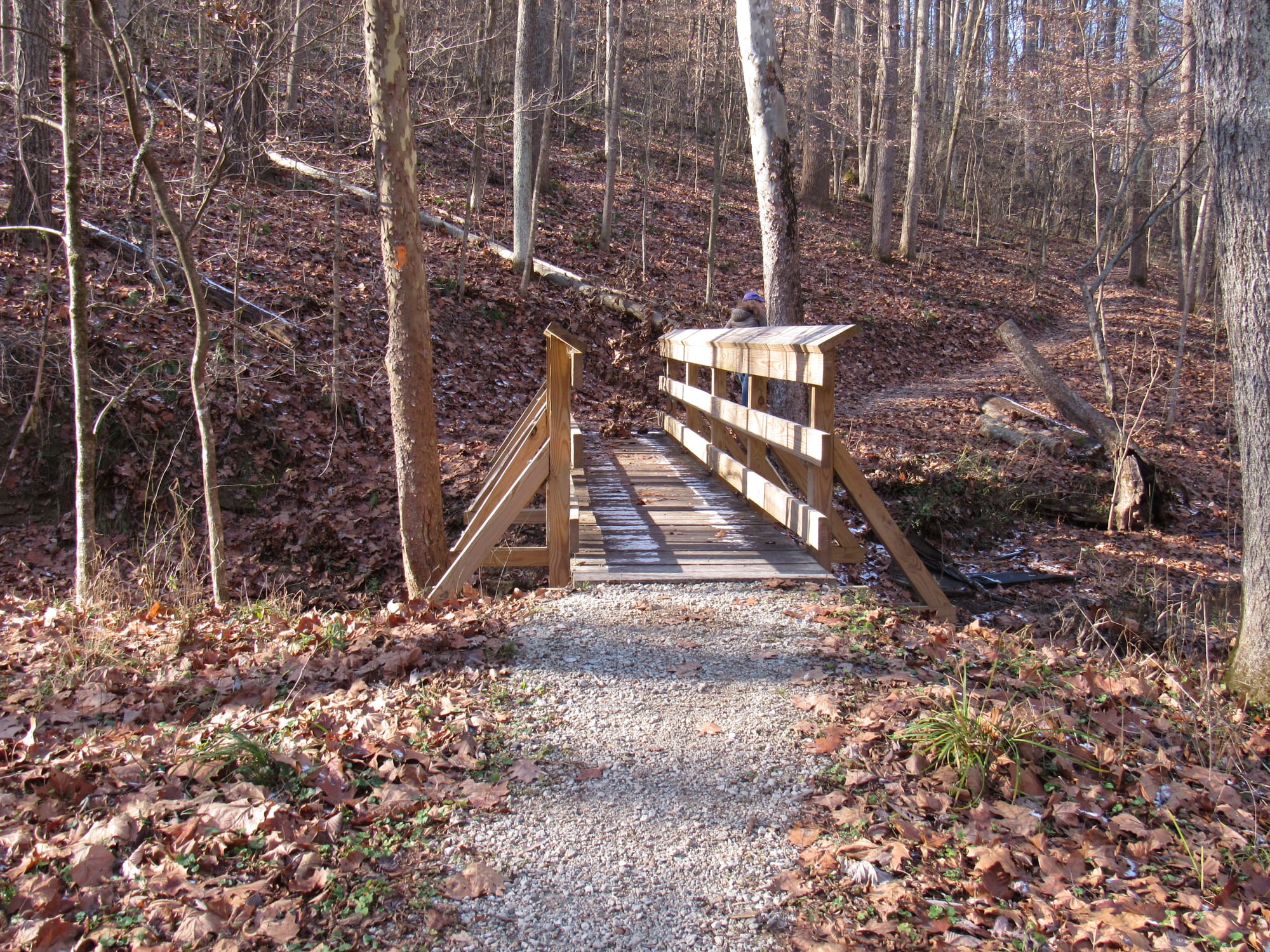
This is the quieter side of Great Southern, and honestly the most interesting. The Canal Trail follows the route of the old Columbus Feeder Canal through a wooded corridor along the river. The surface is natural, packed earth and gravel, so sturdy shoes are a good idea, particularly after rain when the low spots hold water.
The canopy here is surprisingly thick for a park this new. Mature trees line both sides of the old canal bed, and you'll feel like you've stepped into a completely different park compared to the open prairie. Watch for exposed canal-era stonework along the edges of the path, remnants of the 1820s engineering that once connected Columbus to the Ohio and Erie Canal at Lockbourne. This is also the section that will eventually link north to Scioto Audubon Metro Park via an extension of the Scioto Greenway Trail. That four-mile connection is still in development. When it's finished, you'll be able to walk or bike from Great Southern all the way to downtown along the riverfront.
Prairie and nature paths
Several spur paths branch off the main paved route into the prairie and wetland areas. These are short, informal walks, perfect for birding or getting a closer look at the restored native grassland. Wild bergamot, black-eyed Susans, and native bluestem are planted throughout. Give it two or three growing seasons to fill in. By midsummer 2027 the wildflower displays should be worth visiting on their own. The wetland on the park's southern edge is worth checking during migration season; standing water and emergent vegetation draw shorebirds and wading species you won't see on the paved trail.
The obstacle course
No other Metro Park in the system has anything quite like this. A 230-yard obstacle course with an over-under, ninja jump, cargo climb, balance beams, and a wall climb. American Ninja Warrior lite, basically, except your backdrop is tall-grass prairie and the Scioto River instead of a studio audience.
Next to the course is a dedicated fitness station with monkey bars, pull-up bars, dip bars, push-up stations, decline sit-ups, inverted rows, and a box jump. If you want to combine a trail walk with an actual outdoor workout, this is one of the few Metro Parks where that's genuinely an option. Scioto Audubon has an obstacle course too, but Great Southern's is newer and the fitness-station integration is tighter. Bring gloves if you're hitting the obstacles in cold weather. The metal gets brutal in November.
The overlook and river access
An overlook deck sits on a raised mound near the park's western edge, with views across the Scioto and the surrounding floodplain. There's a swing bench up here, a nice touch if you want to sit and watch the water for a while. On clear days the tree line stretching south toward Scioto Grove is visible on the horizon.
The Scioto runs along the park's entire western boundary, giving you direct access for kayaking, canoeing, and fishing. There's no formal boat ramp, just flat put-in points along the bank that work fine for small watercraft. The Scioto south of Columbus is Ohio's longest free-flowing, undammed stretch of river. According to Ohio Division of Wildlife data, 116 species of fish and 67 species of freshwater mussels live in these waters. Anglers, you have real variety here.
History and nature
From canal boats to quarries to Metro Park
Look at the exposed riverbank here and you're reading two hundred years of history in a few feet of dirt.
Start with the canal. In 1824, engineers began surveying an eleven-mile navigable feeder from the Scioto south to Lockbourne, where it would join the main Ohio and Erie Canal. Groundbreaking came on April 30, 1827, and the first canal boat ran from Lockbourne to Columbus in 1831. Lockbourne exploded into a hub of commerce, with eight lift locks, two canal basins, and a junction that made it one of the busiest stretches on the whole system. The Ohio and Erie Canal itself ran 308 miles, Lake Erie to the Ohio River, built between 1825 and 1832. The Canal Trail at Great Southern follows the exact route of the feeder that kept Columbus connected.
Then the canal era ended. The Scioto valley sits at the lowest point in Franklin County, so limestone is right near the surface, and quarrying moved in. Anderson Concrete, Shelly Materials, Olen, Kokosing; they carved out the quarry lakes you can still spot on satellite maps, scattered south toward Circleville. The most recent chapter: this parcel held the City of Columbus's Heer Park, which closed in 2021 over safety concerns. Mixed in were ODNR land, American Electric Power land, and portions of historic Harman Farms. Metro Parks spent years assembling the 70-acre site. Total cost for the park and planned Scioto Trail extension ran about twenty million dollars.
Geology you can actually see
Blue clay. Cobbles. A layer of sand, then wood debris, then freshwater mussel shells thousands of years old. The exposed banks along the Scioto are a field geology lesson you didn't plan for. Metro Parks naturalists have documented the layers: glacial-period deposits sitting right alongside canal stonework from the 1800s. Deeper in the bank, lake-bottom sediments hold mussel shells and woody debris from an ancient lake that covered this low-lying area before it silted in and became dry land. Above all of it, a distinct soil horizon where the landscape finally stabilized. Most visitors walk right past it.
Wildlife along the Scioto corridor
Even before Metro Parks broke ground, birds were already here. Columbus Audubon had been documenting the site for years: gulls, raptors, flocks of starlings, robins, and various sparrows. The real surprise was Blue Grosbeaks, a striking bird you'd normally associate with the Deep South, which showed up as potential breeders at this scruffy industrial riverfront for several consecutive summers. Nobody quite expected that.
Great blue herons are a regular presence along this stretch, standing motionless in the shallows hunting fish, frogs, and crustaceans; they return to central Ohio as early as mid-February in warm years. Four miles north at Scioto Audubon, birders regularly record waterfowl, sandpipers, warblers, flycatchers, and kingfishers, and you can expect similar species to filter down as the habitat establishes. The Scioto functions as an avian highway through central Ohio, and Great Southern sits right on the flight path.
Bringing the dog
Dogs are welcome on a leash of six feet or shorter, following standard Metro Parks pet policy. Nothing here is technical or steep, so small dogs and older dogs do fine. The Canal Trail is where most dogs seem happiest: packed earth, leaf litter, the occasional mud puddle to investigate. Bring water; there are no pet stations yet. The river looks tempting, but keep dogs leashed and away from the put-in points where kayakers launch.
Tips and seasonal notes
Spring (March–May): the best season for birding, as migrants follow the river corridor and the prairies green up fast once April hits. The Canal Trail can be soft after rain, so wear boots.
Summer (June–August): prairie grasses and wildflowers peak, and the obstacle course draws weekend crowds. Beat the heat with an early start. River access is prime for kayaking.
Fall (September–November): prairie grasses turn gold and copper, and raptor migration picks up along the river. The wooded Canal Trail offers decent color, though the canopy is still young in places. The grasses going gold in October are genuinely worth stopping for.
Winter (December–February): open year-round, but the Canal Trail gets icy after freezing rain, so stick to pavement. The overlook on a clear January morning, with fog lifting off the Scioto, is worth bundling up for.
What to bring: sturdy shoes (boots for the Canal Trail after rain), water (no drinking fountains yet), binoculars for birding, sunscreen for the fully exposed prairie, bug spray in summer, and gloves for the obstacle course in cold weather.
Nearby trails
Great Southern makes a solid anchor for a south Columbus park day. Combine it with any of these:
- Columbus Metro Parks: Franklin County Trail Guide — our full guide to every Metro Park in the system, with trail maps and highlights.
- Best Hikes Near Columbus, Ohio — 15 trails worth your weekend, from urban loops to gorge hikes.
- Scioto Audubon Metro Park — four miles north along the Scioto, with its own obstacle course, climbing wall, and boat ramp. The future greenway will link the two parks by trail.
- Scioto Grove Metro Park — 620 acres of mature forest and river bluffs in Grove City, about 15 minutes south, with seven miles of trails and backpacking sites.
- Three Creeks Metro Park — where Big Walnut, Alum, and Blacklick creeks meet, just east of the park.
More in
Hiking Ohio Updates for 2025: New Trails & More
Hiking Ohio Updates for 2025: new trails added beyond Ohio borders. State parks, national monuments & hidden gems explored with photos and trail guides.