Hocking Hills State Park: Every Trail Ranked
📍 Hocking County, southeast Ohio (1 hr from Columbus)
🥾 7 major hiking areas | 25+ miles of trail
⛰️ Difficulty: Easy to Moderate-Hard
💰 Free admission, free parking
🐕 Dogs allowed on state park trails (not Conkle's Hollow)
🕐 Open dawn to dusk, year-round
Hocking Hills is the one. If you've hiked anywhere in Ohio — or even just thought about it — this park has crossed your radar. It's the most visited state park in Ohio by a wide margin, pulling in over three million visitors a year. And for good reason. Sandstone gorges, recess caves the size of concert halls, waterfalls dropping into hemlock-shaded pools. It's the kind of scenery you'd expect to find in West Virginia, not an hour south of Columbus.
But here's the thing about Hocking Hills: most visitors only see one or two areas. They park at Old Man's Cave, snap some photos, and drive home thinking they've done it. They haven't. Not even close.
Hocking Hills State Park and its adjacent preserves contain seven major hiking areas, each with its own personality, its own terrain, and its own reason to exist. You could spend a long weekend here and still not cover everything. So let's break it all down — every trail, ranked from bottom to top by a combination of scenery, trail quality, and overall hiking experience.
No entrance fee. No parking fee. Just show up and walk.
How the rankings work
Every trail here is worth hiking. Getting ranked seventh at Hocking Hills is like finishing last in an Olympic final — you're still world-class. The ranking weighs three factors: scenery and wow factor (50%), trail variety and engagement (30%), and crowd-to-payoff ratio (20%). A gorgeous trail that's always packed loses points to an equally gorgeous trail with breathing room.
Coordinates for each area are included so you can plug them straight into your GPS. The seven major areas are spread across roughly 15 miles of Hocking County road, so plan for some driving between trailheads.
#7: Whispering Cave Trail
Distance: 2 mi out-and-back (short route) or 5 mi loop | Elevation: 400 ft | Difficulty: Moderate | Trailhead: Near Hocking Hills State Park Lodge
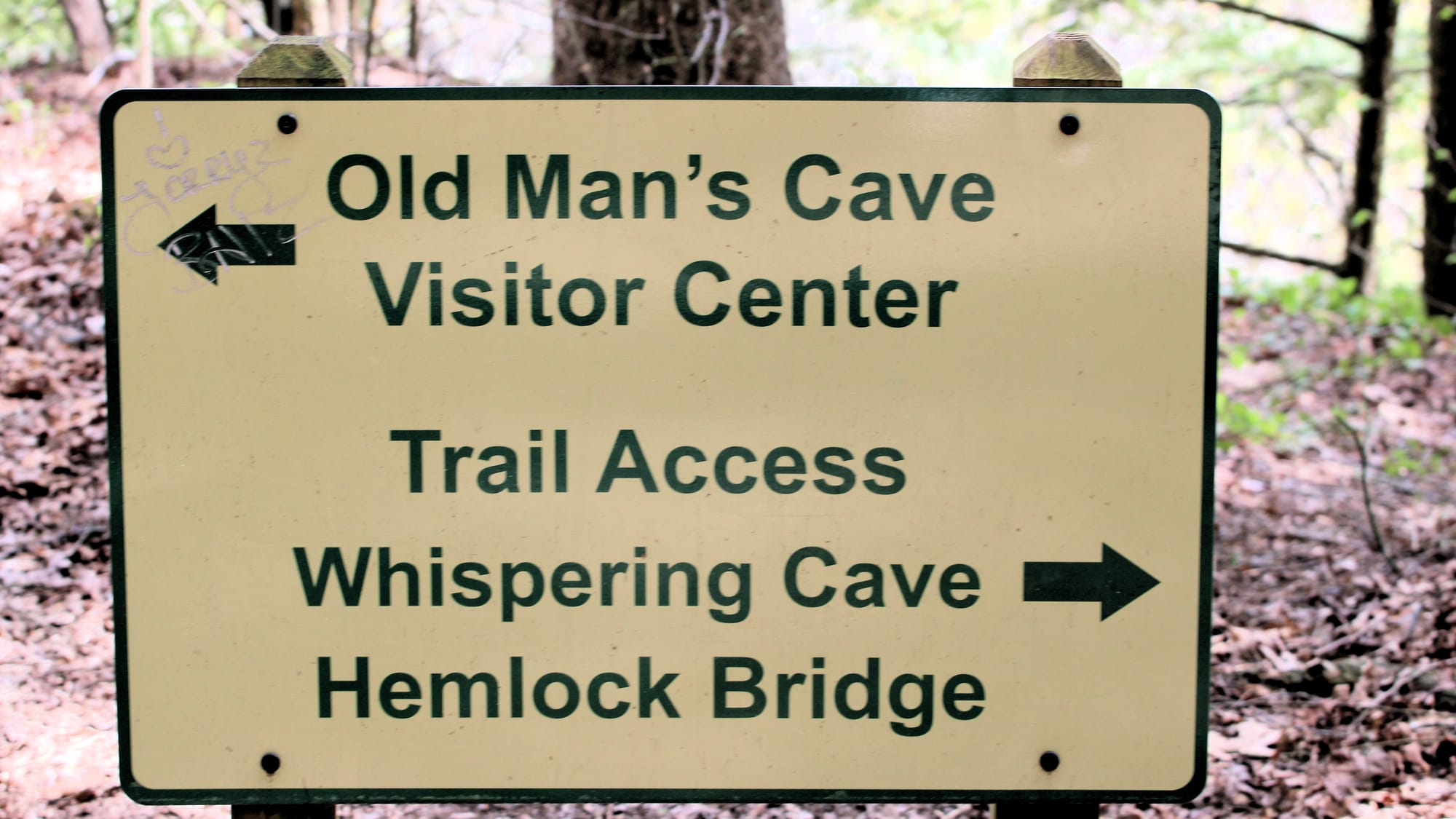
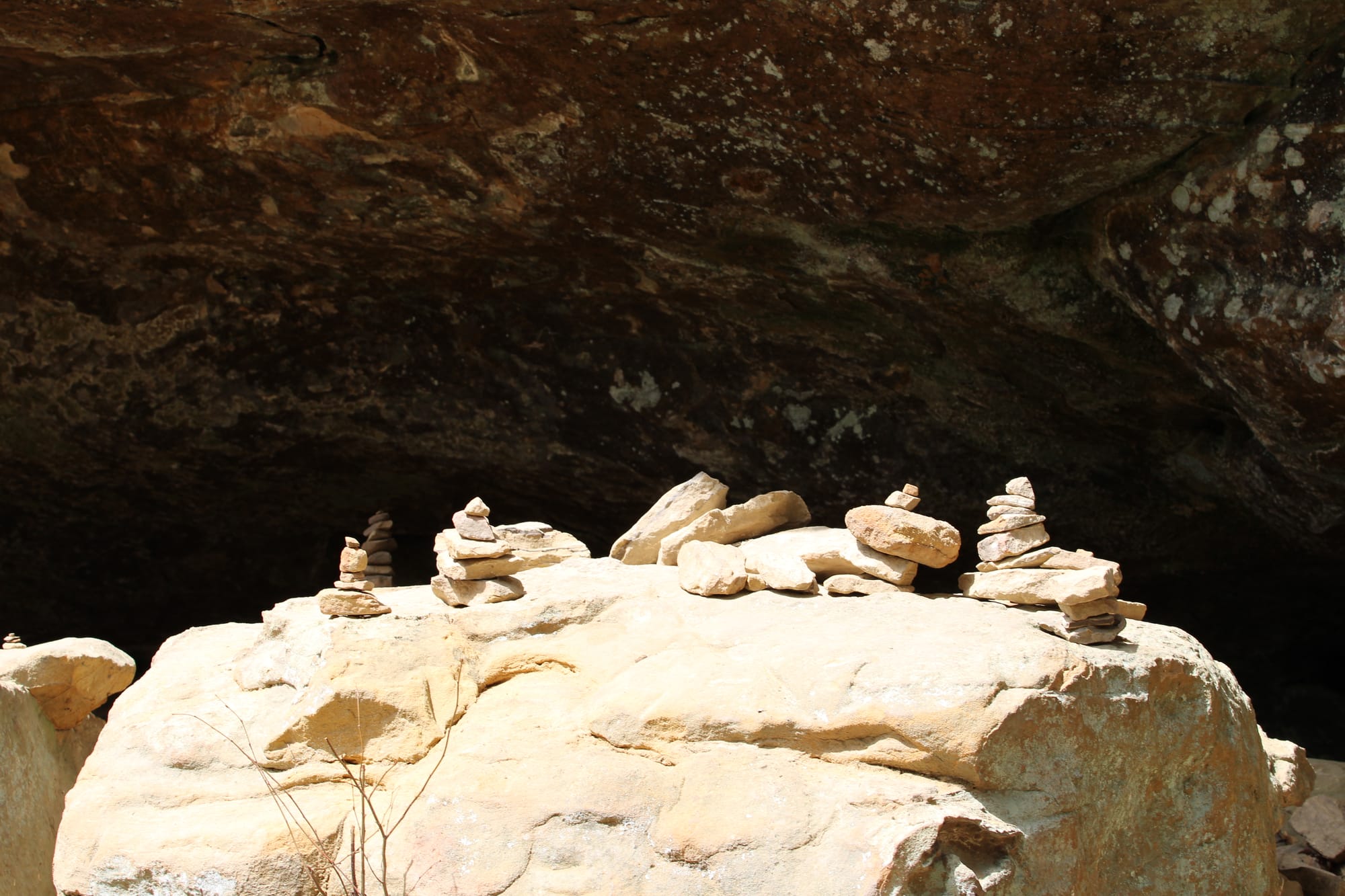
Whispering Cave is the newest addition to the Hocking Hills trail system, opening for public access in 2017 via the Hemlock Bridge Trail. The cave itself is legitimately impressive — roughly 300 feet wide and 100 feet tall, making it the second-largest recess cave in the region behind Ash Cave. A seasonal waterfall pours over the lip when water is running.
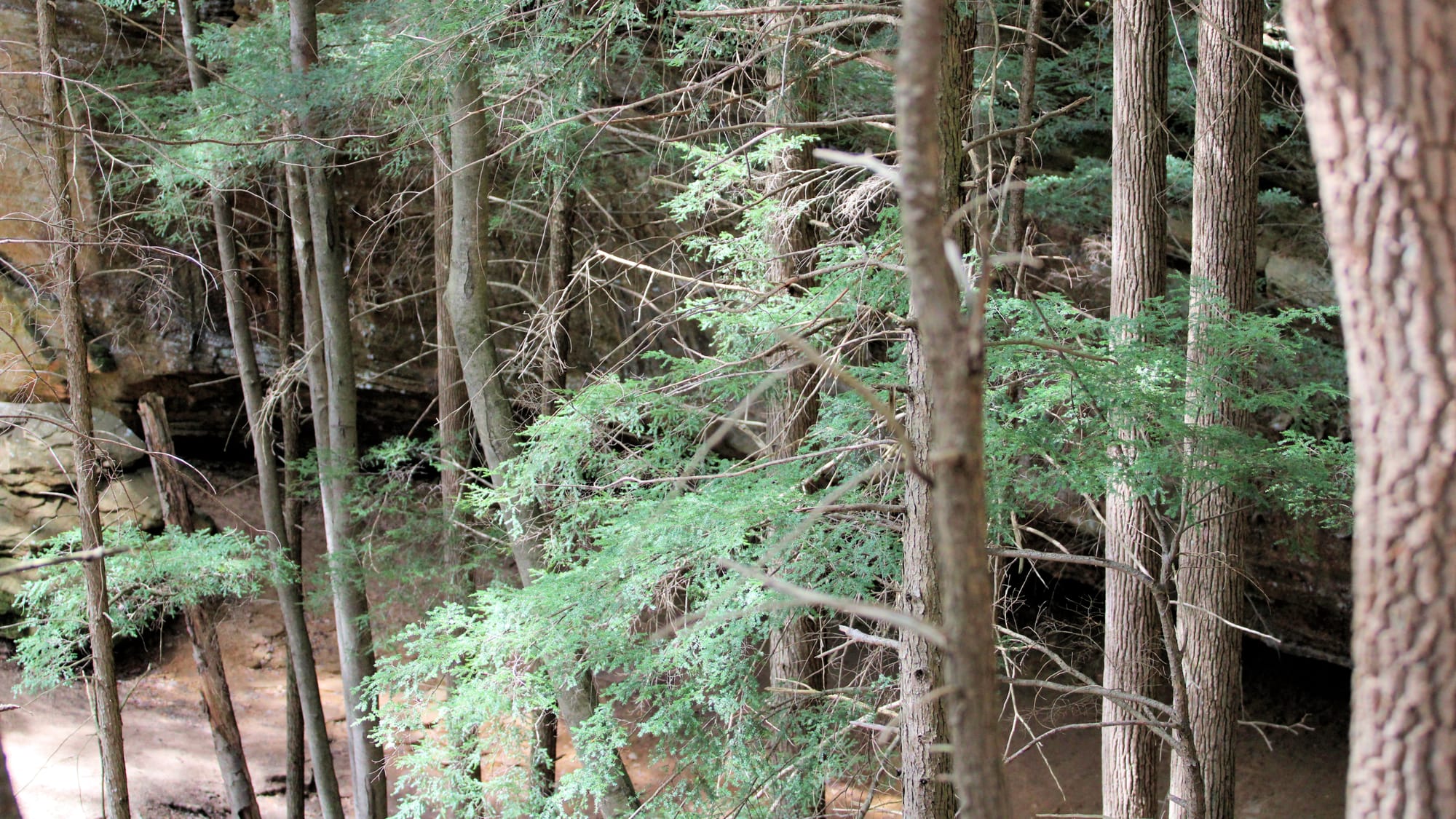
The trail descends through hemlock forest and crosses a suspension bridge over a ravine. Coming back out is the hard part — plan for a solid uphill climb on the return.
So why is it ranked last? Two reasons. The waterfall is seasonal and often dry by midsummer. And the cave, while big, doesn't have the dramatic framing that Ash Cave or Old Man's Cave delivers. You won't regret hiking it, but if you're picking three or four trails for a day trip, this one gets cut first.
Best for: Hikers who've already done the classics and want something quieter.
#6: Cantwell Cliffs
Distance: 0.9 mi loop (2 mi for both Rim and Gorge loops) | Elevation: 223 ft | Difficulty: Moderate-Hard | Trailhead: 39.5470, -82.5783 (off SR 374)
Cantwell Cliffs is the most remote of the seven areas, sitting about 10 miles north of Old Man's Cave. That distance keeps the crowds thin — sometimes you'll have the gorge to yourself entirely. The 150-foot sandstone cliffs tower over Buck Run, a creek that trickles into a seasonal waterfall.
The signature feature here is a narrow rock passage called Fat Woman's Squeeze. You'll wedge yourself through a gap in the cliff face and descend over 150 feet into a deeply shaded hemlock gorge. It's the most physically engaging trail at Hocking Hills. You're climbing, ducking, squeezing, and scrambling in ways that no other trail in the park demands.
Two loops are available — the Rim Trail (red blazes) along the clifftops and the Gorge Trail (yellow blazes) through the bottom. Do both. Plan about 60 to 80 minutes for each loop.
The reason it sits at six is that the overall scenery, while solid, doesn't quite match the top-tier trails. The waterfall is modest. The gorge is narrow rather than dramatic. But the physical experience is unmatched. If you want to earn your views, Cantwell Cliffs is where you go.
Best for: Adventurous hikers who want to scramble and squeeze through rock formations.
#5: Rock House
Distance: 0.5 mi out-and-back | Elevation: Moderate (stairs) | Difficulty: Easy-Moderate | Trailhead: 39.4558, -82.5169 (off SR 374)
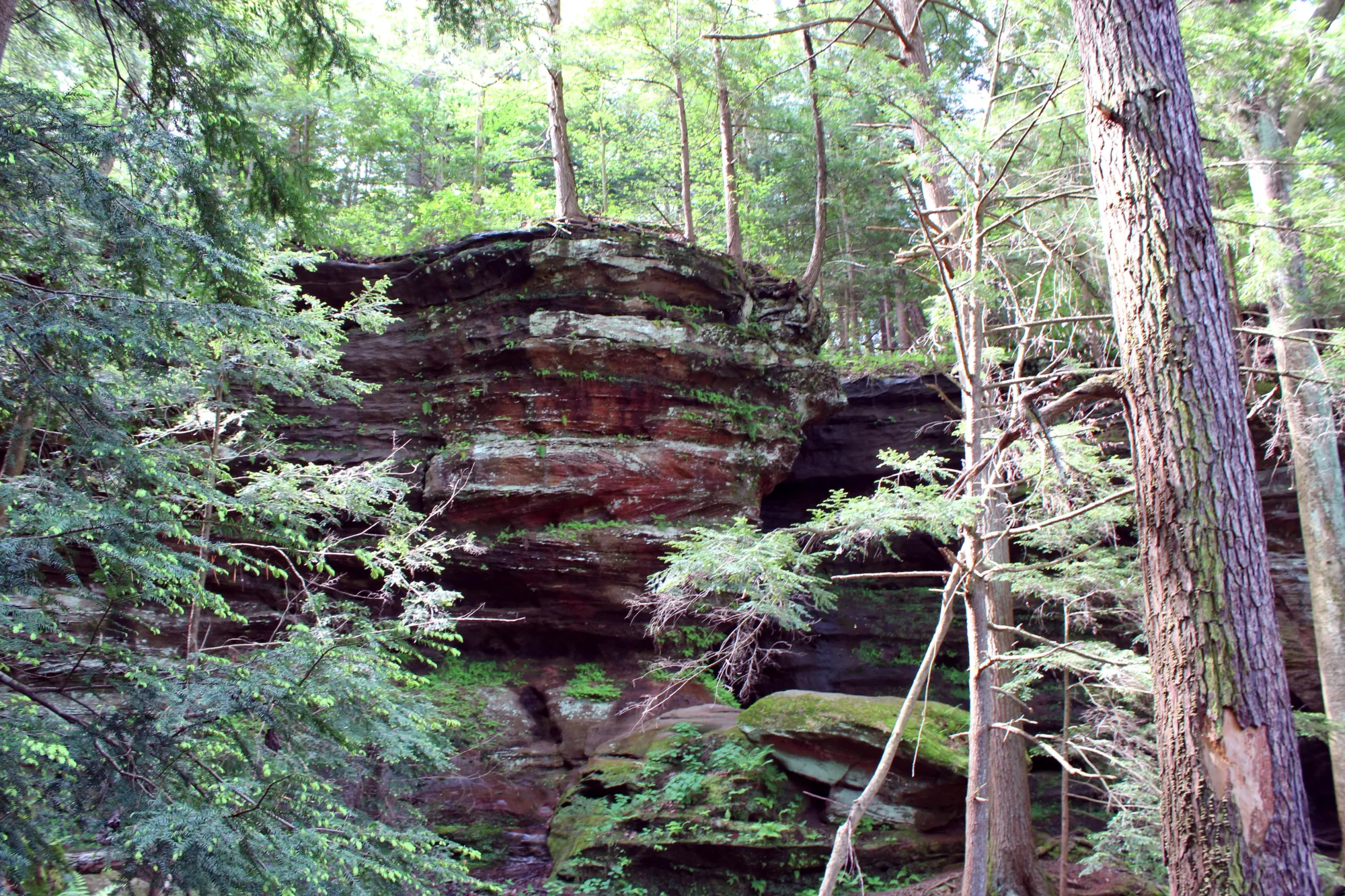
Rock House is the only true cave in Hocking Hills. Not a recess cave, not an overhang — an actual enclosed corridor carved 150 feet up a sandstone cliff face. Light pours through natural "windows" in the rock wall, creating an atmosphere that feels more gothic cathedral than Ohio state park.
The trail itself is short. A flight of stone steps leads you up the cliff to the cave entrance, and then you walk through the corridor. The whole thing takes maybe 30 minutes. But the cave is genuinely unlike anything else in the park — or in the state. The ceiling arches overhead, columns of rock divide the space, and the windows frame the forest canopy outside in a way that feels almost designed.
What holds Rock House back from the top tier is the brevity. It's an incredible 15-minute experience inside the cave, but the trail getting there and back doesn't offer much. You park, you climb stairs, you see the cave, you come back down. There's no gorge walk, no waterfall, no extended hike to complement the main attraction.
Pair Rock House with Cedar Falls or Old Man's Cave on the same day. It's on the way and adds a completely different texture to your trip.
Best for: Anyone who wants to see something genuinely unique. Kids especially love it.
#4: Cedar Falls
Distance: 0.9 mi out-and-back | Elevation: 177 ft | Difficulty: Moderate | Trailhead: 39.4308, -82.5303 (off SR 374)
Cedar Falls is the largest waterfall by volume in all of Hocking County. Water drops about 50 feet over a wide sandstone ledge into a pool below, and in spring or after heavy rain, it thunders. The name is a historical mistake — early settlers confused the hemlock trees surrounding the falls with cedars. The hemlocks are still there, towering over the gorge and blocking most of the sunlight from reaching the trail below.
The hike down is a steady descent on well-maintained stairs and packed gravel. You'll cross a bridge at the bottom and come face-to-face with the falls. The rock amphitheater behind the waterfall creates natural acoustics — you can hear the water echo off the sandstone from a surprising distance.
Cedar Falls ranks fourth because it delivers the best single waterfall moment in the park. The falls are more consistently flowing than Whispering Cave's seasonal cascade, and the hemlock-shaded gorge setting makes the whole area feel cool even on an August afternoon. The trail itself is straightforward — down and back up — but the payoff at the bottom is first-rate.
Cedar Falls also sits along the Grandma Gatewood Trail, which connects it to both Old Man's Cave and Ash Cave. If you're hiking the full 6-mile connector, Cedar Falls is your midpoint reward.
Best for: Waterfall chasers. Best visited in spring or after rain for peak flow.
#3: Ash Cave
Distance: 0.5 mi out-and-back | Elevation: Minimal (wheelchair accessible to final stairs) | Difficulty: Easy | Trailhead: 39.3983, -82.5417 (off SR 56)
Ash Cave is the single most dramatic natural feature in Ohio. The numbers alone tell you why: 700 feet from end to end, 100 feet deep, with a horseshoe-shaped waterfall dropping 90 feet over the lip. It's the largest recess cave in the state, and walking into it feels like entering some ancient amphitheater carved by a patient giant.
The trail to get there is a flat, paved, half-mile walk through a gorge. It's wheelchair accessible nearly to the cave itself, making it one of the few truly accessible natural wonders in Ohio's park system. There's a final set of stairs at the end to reach the cave floor, but even from the accessible overlook, the scale is staggering.
The cave gets its name from the massive ash deposits found inside — evidence of centuries of use by Native Americans, who used the cave as a shelter. The ash pile was reportedly several feet deep when early European settlers first explored the area.
What keeps Ash Cave from the top spot is the trail itself. It's a paved path to a destination. There's no climbing, no gorge scrambling, no sense of earning the view. You walk, you arrive, and your jaw drops. For pure scenery, Ash Cave is a 10 out of 10. For overall hiking engagement, it's closer to a 6. That combination still puts it third, because the cave is just that good.
Best for: First-time visitors, families with small children, anyone with mobility concerns. The single best introduction to Hocking Hills.
#2: Conkle's Hollow (Rim Trail)
Distance: 2.6 mi loop (Rim) or 0.75 mi out-and-back (Gorge) | Elevation: 427 ft (Rim) | Difficulty: Moderate-Hard (Rim), Easy (Gorge) | Trailhead: 39.4472, -82.5672 (off SR 374)
Conkle's Hollow is a State Nature Preserve adjacent to Hocking Hills State Park, and it contains the deepest gorge in Ohio. The vertical sandstone walls rise 200 feet straight up from the narrow canyon floor. Two trails give you two completely different perspectives.
The Gorge Trail is a flat, easy, three-quarter-mile walk along the canyon bottom. Ferns and moss coat the lower walls, and so little sunlight reaches the floor that the temperature drops noticeably as you walk deeper. It's beautiful, quiet, and accessible.
But the Rim Trail is where Conkle's Hollow becomes something special. The 2.6-mile loop follows both edges of the gorge, with cliff-edge viewpoints that drop 200 feet straight down. No guardrails in most spots. Just you, the trail, and a long way down. The path is uneven, rooty, and requires steady footing — especially on the sections where the trail runs within a few feet of the edge.
The views from the rim are the best in Hocking Hills, and it's not particularly close. You're looking straight down into a slot gorge with sheer sandstone walls, old-growth hemlock clinging to ledges, and nothing but forest canopy stretching to the horizon. In fall, the golden canopy against grey-white sandstone cliffs gives you a photo that looks fabricated — like someone cranked the saturation in post.
Two important notes: dogs are not allowed (it's a Nature Preserve, not a state park trail), and the rim trail is not suitable for young children or anyone uncomfortable with exposed heights. Take it seriously.
Conkle's Hollow sits at number two because the rim trail delivers the most exhilarating hiking experience in the entire Hocking Hills region. The only thing keeping it from the top spot is that it's a single gorge — spectacular, but a single visual theme.
Best for: Experienced hikers looking for the best views in the park. The rim trail is a must-do.
#1: Old Man's Cave
Distance: 1–1.5 mi loop (main area) or 6 mi via Grandma Gatewood Trail | Elevation: ~200 ft | Difficulty: Moderate | Trailhead: 39.4342, -82.5383 (off SR 664)
Old Man's Cave takes the top spot because it delivers the complete Hocking Hills experience in a single trail. Upper Falls, Lower Falls, the Devil's Bathtub, the cave overhang, stone bridges, hemlock gorge — every signature element of the park appears here in a mile-and-a-half loop. No other trail in the region packs that density of landmarks into such a compact distance.
The trail starts at the kiosk near Upper Falls, where the water spills over a wide sandstone ledge into a pool below. From there, you descend into the gorge past the cave — named for Richard Rowe, a hermit who lived in the recess cave in the 1800s and whose remains were found there after his death. The Devil's Bathtub is a swirling pool carved into the rock by centuries of water erosion, and Lower Falls is a multi-tiered cascade that might be the single most photographed spot in the entire Ohio state park system.
The trail is well-maintained with stone stairs, bridges, and marked paths. It's moderate in difficulty — the stairs can be steep and slippery when wet, but there's nothing technical here. Plan about 60 to 90 minutes for the main loop.
The one honest downside: crowds. Old Man's Cave is by far the busiest area in the park. Weekend mornings in spring and fall can feel like a highway. Arrive before 9 AM or visit on a weekday if you want breathing room.
Even with the crowds, Old Man's Cave earns the top ranking. The variety is unbeatable, the landmarks are iconic, and the trail quality is the best in the park. If you only have time for one hike at Hocking Hills, this is it.
Best for: Everyone. The essential Hocking Hills experience.
340 million years of sandstone
Every gorge, cave, and waterfall in Hocking Hills exists because of Blackhand sandstone. This rock formed roughly 340 million years ago during the Mississippian Period, when southeastern Ohio sat beneath a vast inland sea. Sand and silt accumulated on the sea floor, compacted under immense pressure, and eventually hardened into sandstone with a high quartz content.
The name comes from a black hand-print petroglyph left by Native Americans on a sandstone cliff face near what is now Newark, Ohio — about 60 miles northeast of here. The petroglyph was destroyed during road construction in the 1800s, but the name stuck.
What makes this sandstone so scenic is also what makes it so fragile. The Blackhand formation has three distinct layers. The top and bottom layers are hard and weather-resistant. The middle layer is softer and more porous — and that's where water does its work. Over thousands of years, seeping water dissolved minerals in the middle layer, carving out the recess caves and overhangs that define the park.
About 10,000 years ago, glaciers pushed just north of the Hocking Hills region. Their meltwater poured south through the valleys, cutting the gorges deeper and wider. The result is a landscape that looks like it belongs in Appalachia, not 50 miles from Columbus.
Tips and seasonal notes
Spring (March–May): The best season. Waterfalls run at full volume, wildflowers carpet the gorge floors, and the hemlock canopy hasn't fully leafed out yet, giving you more light. Trails can be muddy and the stone stairs slippery — wear boots with grip.
Summer (June–August): The gorges stay noticeably cooler than surrounding areas thanks to hemlock shade and sandstone walls. Waterfalls slow or stop entirely by late July in dry years. Crowds peak in June and July.
Fall (September–November): The second-best season. Fall color against grey sandstone is photogenic beyond belief, especially from the Conkle's Hollow rim. October weekends are packed — arrive early.
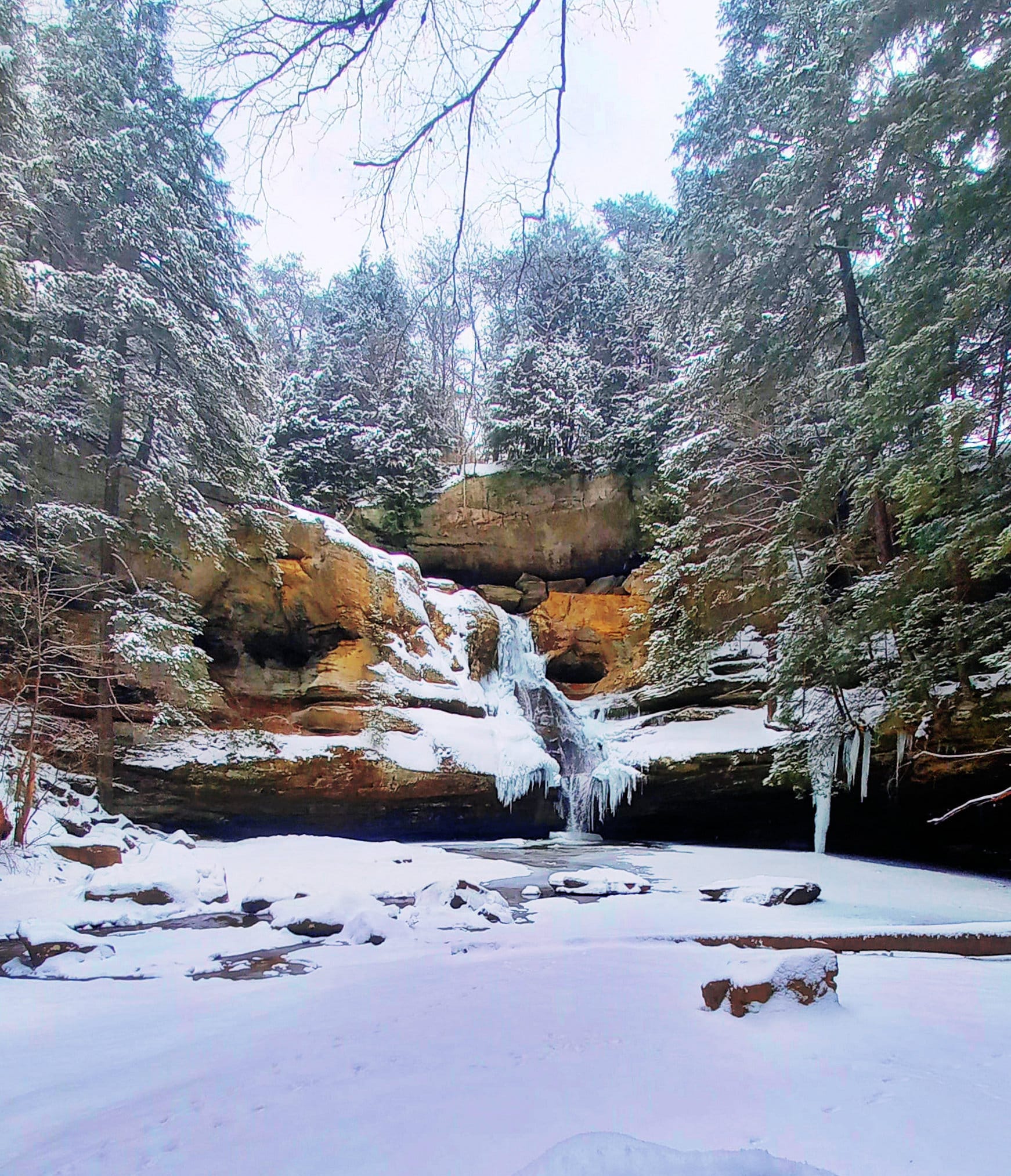
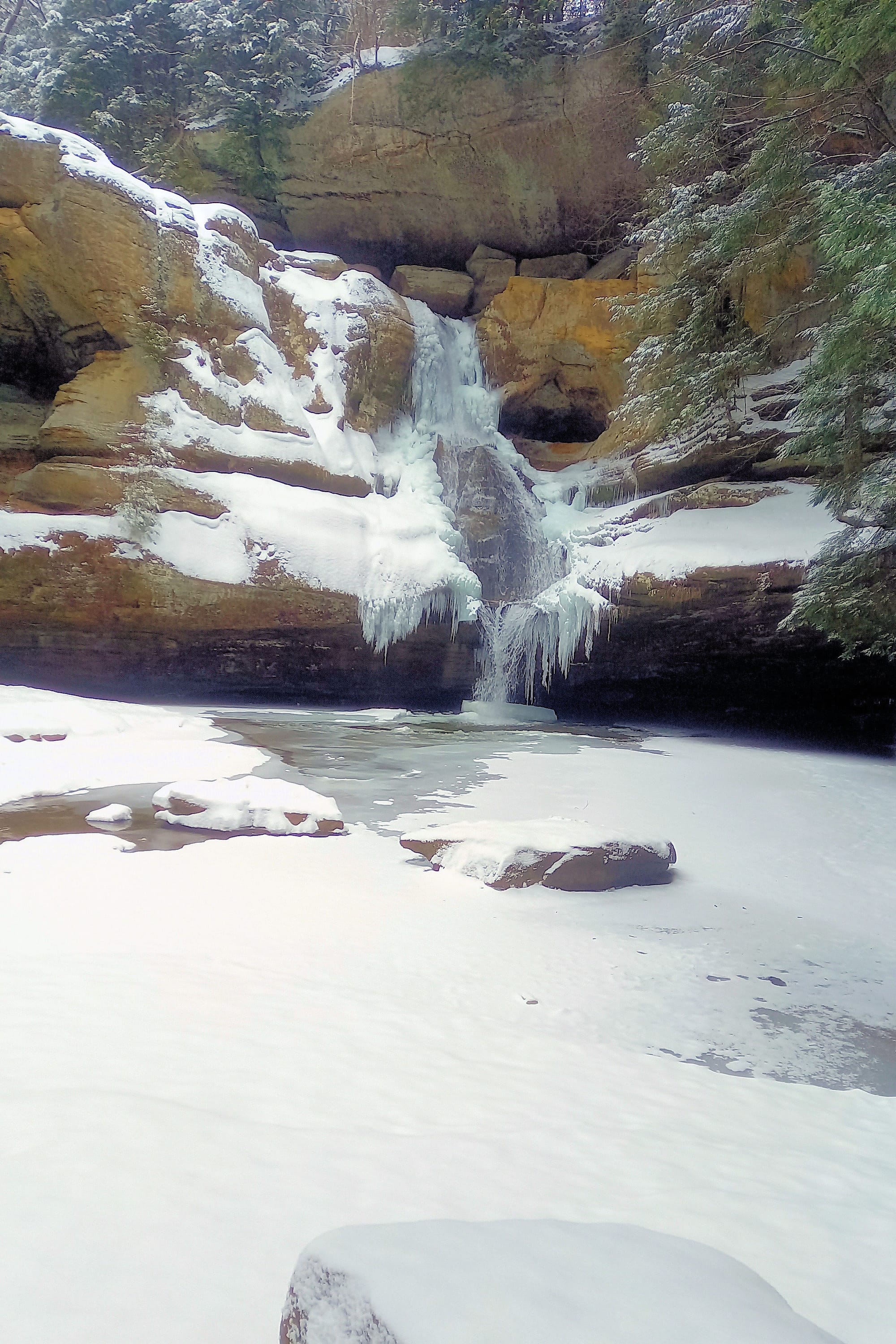
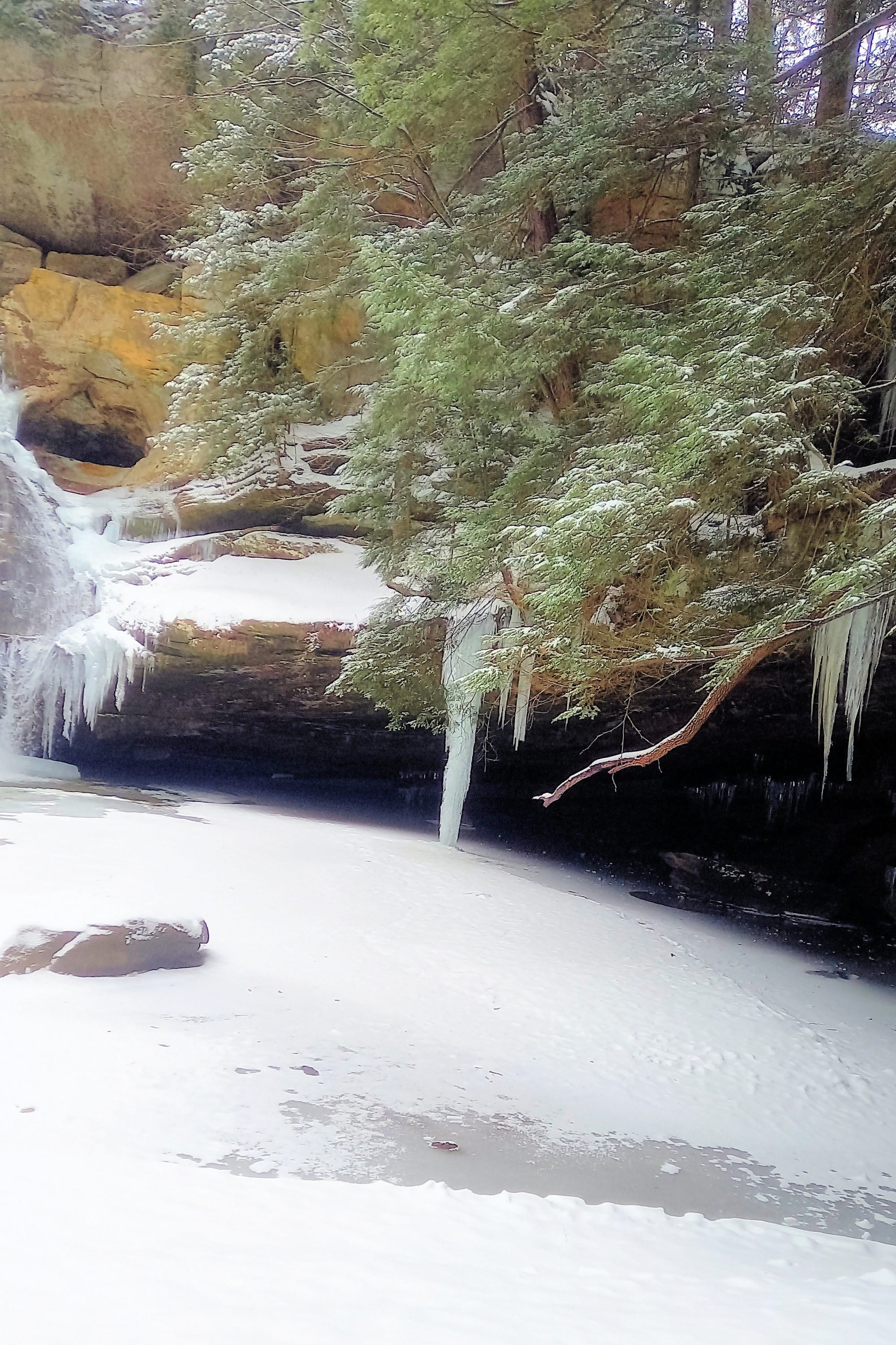
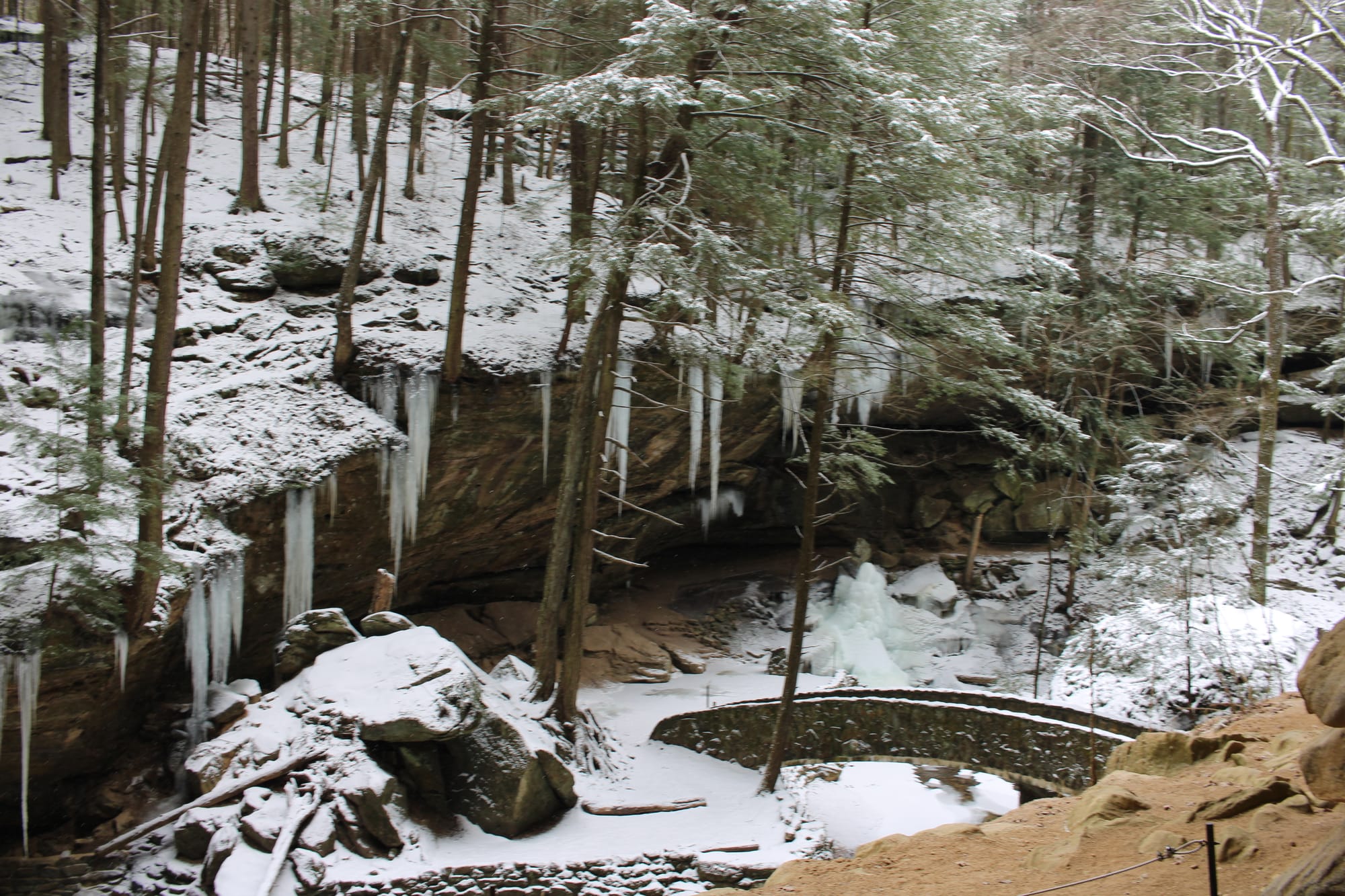
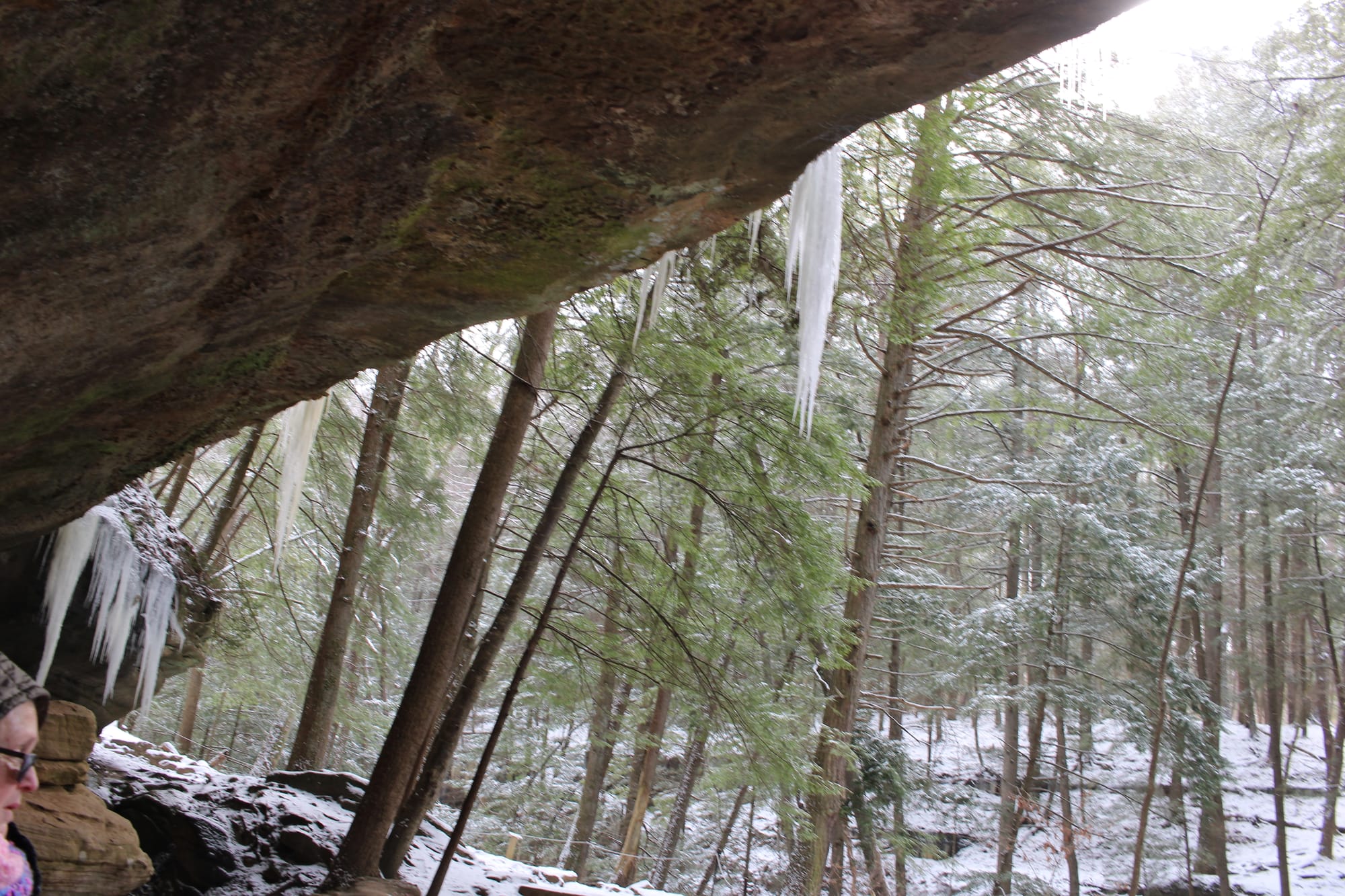
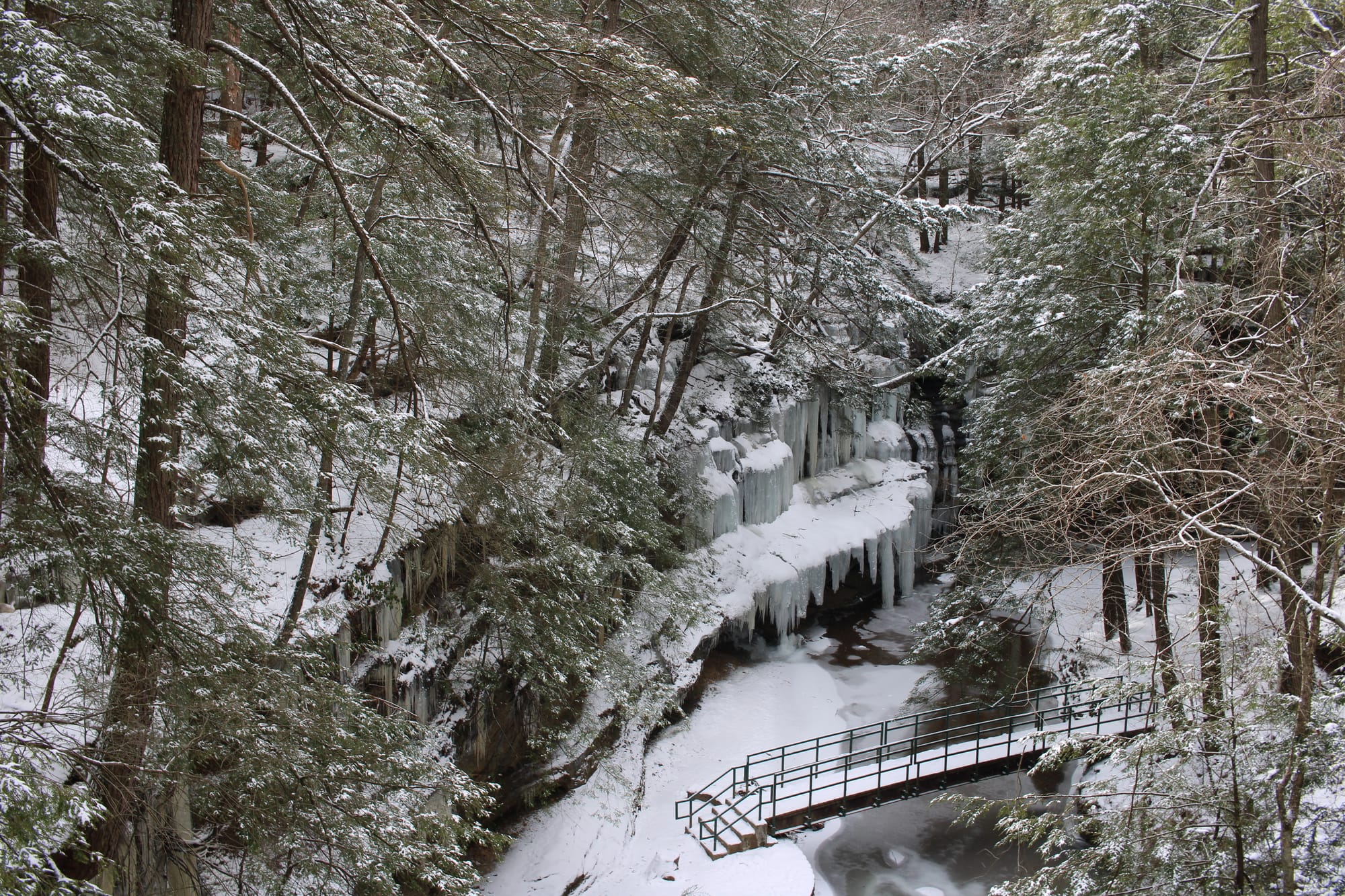
Winter (December–February): Frozen waterfalls and ice formations make winter the most dramatic season for photography. Trails can be icy and dangerous. Traction devices recommended. Parking lots may not be plowed after snowfall.
Parking: Each of the seven areas has its own parking lot. Old Man's Cave fills up fast on weekends — the upper lot near the visitor center is larger. Cedar Falls has three lots. Cantwell Cliffs rarely fills.
Dogs: Welcome on all state park trails (Old Man's Cave, Cedar Falls, Ash Cave, Rock House, Cantwell Cliffs, Whispering Cave) with a 6-foot leash. Not allowed at Conkle's Hollow or any state nature preserve.
Time to plan: A focused day trip covers the Big Four — Old Man's Cave, Cedar Falls, Ash Cave, and Rock House — in about six to eight hours including drive time between trailheads. A full weekend adds Cantwell Cliffs, Conkle's Hollow, and Whispering Cave.
Nearby trails worth exploring
Hocking Hills isn't the only hiking in Hocking County. These trails make excellent additions to a weekend trip:
-
Whispering Cave — Our full trail guide to the newest Hocking Hills hiking area, with maps and detailed directions from the Lodge trailhead.
-
Ash Cave Fire Tower — A short detour near Ash Cave leads to a historic fire lookout tower. Learn how fire towers worked and who staffed them.
-
Boch Hollow State Nature Preserve — 607 acres of forested hills and ponds just minutes from Hocking Hills, with a fraction of the crowds.
-
Rhododendron Cove State Nature Preserve — Scenic wildflowers and wildlife in a quiet Hocking County preserve. A perfect complement to the busier state park trails.
-
Nelson-Kennedy Ledges vs. Hocking Hills vs. Little Rocky Hollow — Can't decide between Ohio's best gorge hikes? Our head-to-head comparison breaks it down.
Conclusion:
It is amazing to have these wonderful locations in Hocking County. We have visited every season. Each location is great to see every season. So get out there!