Wayne National Forest: Ohio's Only National Forest
Over 240,000 acres · 300+ miles of trails · Open 24 hours, year-round · Free (fees at some developed areas) · Dogs welcome
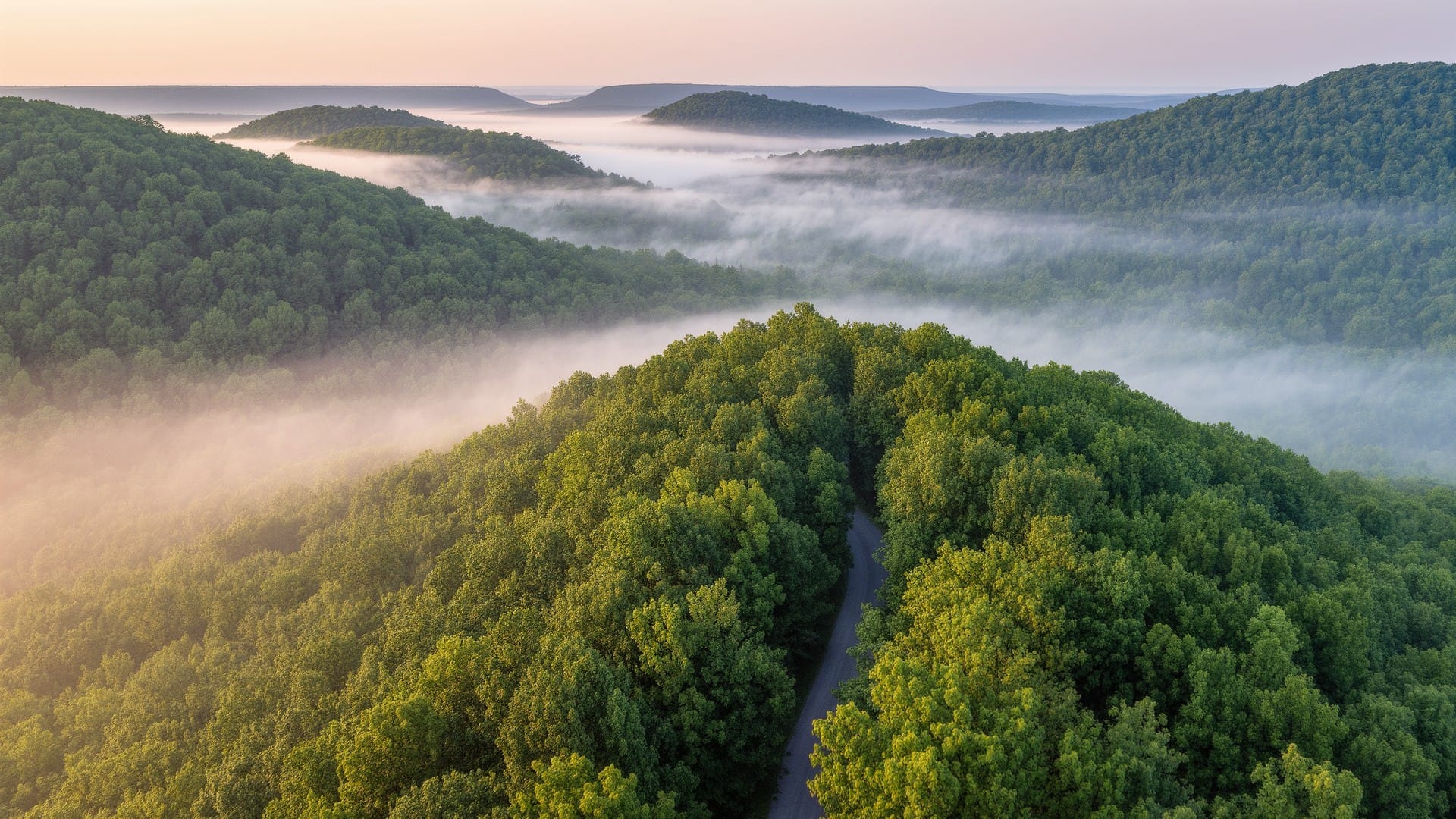
Wayne National Forest is Ohio's only national forest, and it's a treasure plenty of Ohioans don't even know exists. Spanning more than 240,000 acres across twelve counties in the southeastern corner of the state, it offers something you won't find in Ohio's busy state parks: genuine solitude. You can hike for miles through rugged Appalachian foothills without seeing another person.
It feels different from Hocking Hills or the Metro Parks the moment you arrive. No crowds, no paved paths, no visitor centers with gift shops. Just rolling hills, oak-hickory forest, and the occasional glimpse of wildlife. This is wild in a way that's increasingly rare in Ohio.
A forest reclaimed
The story of Wayne is one of remarkable recovery. When European settlers arrived in southeastern Ohio, they found a landscape covered in ancient forest. Over the following century those woods were almost completely cleared, first for farmland, then for the timber and charcoal that fed the iron furnaces dotting the region.
By the 1930s the land was wrecked. Failed farms, eroded hillsides, and abandoned mining operations left the area economically depressed. In 1934 the federal government began buying up these worn-out lands, and in 1951 the area was officially designated Wayne National Forest. Today, after roughly 90 years of regrowth, the forest has returned. What were once barren hillsides now hold a thriving ecosystem of mixed hardwoods, home to deer, wild turkey, the occasional black bear, and dozens of bird species. Walking through these woods, it's hard to imagine they were ever gone.
Three districts, one forest
Wayne is divided into three ranger districts, each with its own character.
Athens Ranger District
In Athens and surrounding counties, this district holds some of the forest's most popular trails, including stretches of the Buckeye Trail. The Burr Oak area offers a reservoir for fishing and swimming plus miles of hiking through Appalachian forest.
Marietta Unit
In Washington County near the Ohio River, this area features stunning overlooks and some of the most rugged terrain in the forest. The Archers Fork Trail delivers challenging backcountry hiking with multiple stream crossings.
Ironton Ranger District
The southernmost district extends to the Ohio River and includes historic iron furnaces and rock shelters. Lake Vesuvius Recreation Area is the highlight, with swimming, camping, and miles of trails around a scenic lake.
Notable hiking trails
Wayne offers over 300 miles of trails. A few standouts:
Lake Vesuvius Trails (Ironton District)
A network of trails circles the 143-acre Lake Vesuvius, named for the nearby Vesuvius Iron Furnace built in 1833. Options range from the easy 8-mile Lakeshore Trail to the tougher 16-mile Vesuvius Backpack Trail. This is the best area for introducing someone to the forest.
Archers Fork Trail (Marietta Unit)
This challenging 9.2-mile loop is considered one of Ohio's best backpacking trails, with ridge-top views, multiple stream crossings, and a true wilderness feel. The Irish Run section includes a natural rock arch.
Wildcat Hollow Trail (Athens District)
A 15-mile backpacking trail that also works as a series of day hikes, passing through recovering forest with wildflowers in spring and strong color in fall.
Buckeye Trail and North Country Trail
Both long-distance routes pass through the forest for roughly 45 miles, offering some of the most remote hiking in Ohio.
What you'll see
Historic iron furnaces
In the 1800s, southeastern Ohio was an iron-producing powerhouse, with dozens of stone furnaces converting local ore and charcoal into pig iron. Several massive stone structures still stand, including Vesuvius Furnace, Buckeye Furnace, and Hope Furnace, some rising 35 feet.
Rock shelters and wildlife
The sandstone geology has carved numerous rock shelters throughout the forest. Wildlife includes white-tailed deer, wild turkey, and, increasingly, black bears, and the forest is excellent for birdwatching.
Visitor information
- Main office: 13700 US Highway 33, Nelsonville, OH 45764 · (740) 753-0101
- Hours: open 24 hours, year-round; some recreation areas have seasonal hours
- Cost: free, with fees at some developed areas like Lake Vesuvius
- Distance from Columbus: the Athens District is about 75 miles (1.5 hours); the Ironton District is about 120 miles (2 hours)
- Dogs: welcome throughout the forest
Tips for your visit
- Prepare for solitude. Unlike Hocking Hills, you may not see another hiker for hours. Carry a map and be self-sufficient.
- Download offline maps. Cell service is spotty to nonexistent across much of the forest.
- Bring waterproof boots. Many trails include unbridged stream crossings.
- Consider camping. The forest has developed campgrounds and allows dispersed backcountry camping.
- Watch for ticks. Wear long pants, use repellent, and check yourself after hiking.
Why it's worth the drive
Wayne offers something rare in Ohio: a true wilderness experience. It lacks the dramatic waterfalls of Hocking Hills, but it makes up for that with sheer scale, solitude, and a remarkable story of recovery. This is a forest that was nearly destroyed and came all the way back. Whether you're day hiking at Lake Vesuvius, backpacking Archers Fork, or tracking down historic furnaces, you'll find a wilder Ohio waiting.
Nearby trails
- Zaleski State Forest — big backcountry trails and the Moonville Rail Trail, just west of the Athens District.
- Hocking Hills State Park — the waterfalls and gorges, about an hour north of the Athens District.
- The Buckeye Trail — Ohio's 1,400-mile loop, which threads right through Wayne.
More in
Columbus Metro Parks: Franklin County Trail Guide 2026
All 20 Columbus & Franklin County Metro Parks with trail guides, maps & directions. Quarry Trails, Highbanks, Three Creeks & more. Your 2026 hiking guide.