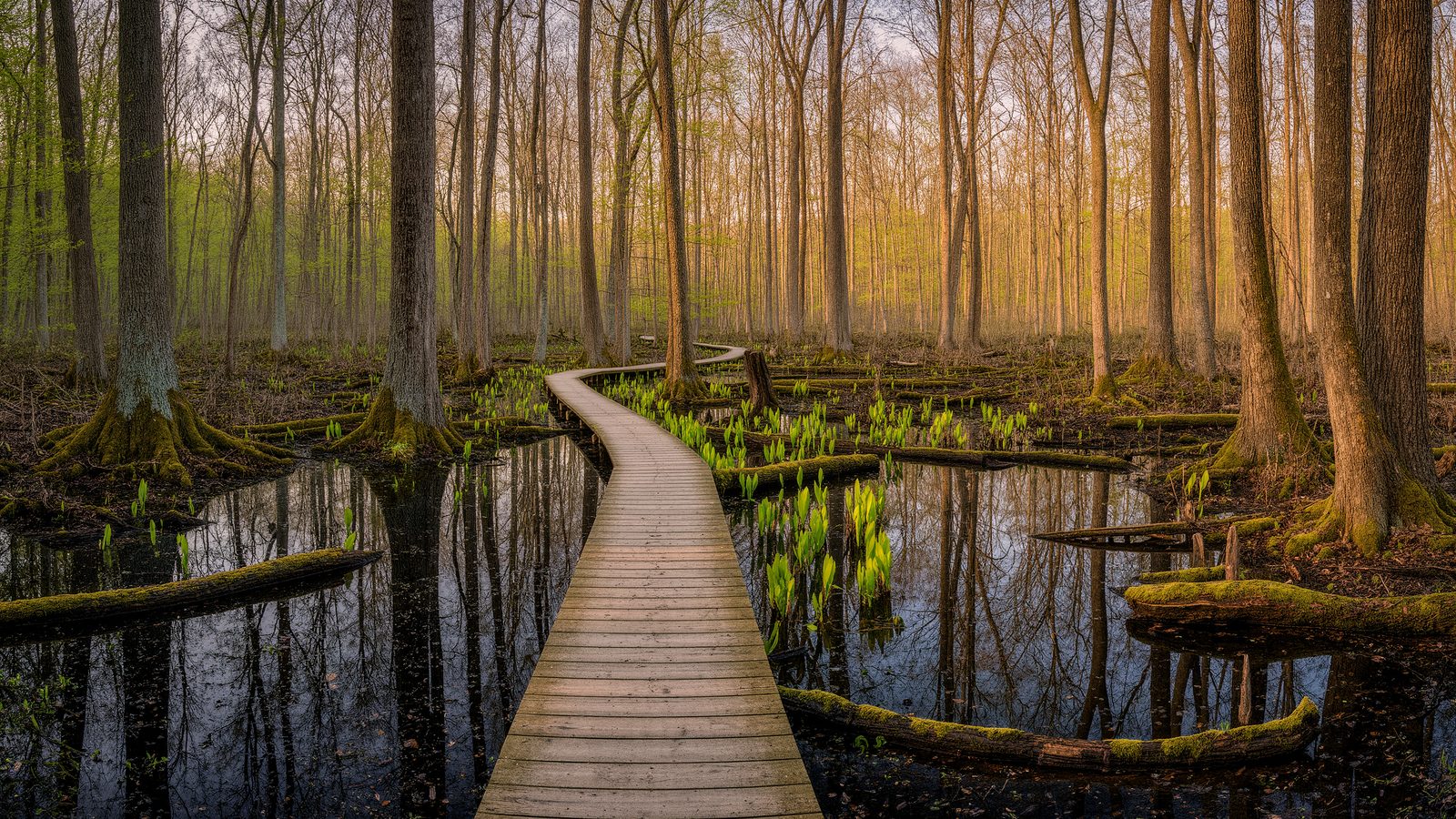
Gahanna Woods State Nature Preserve: A Quiet Swamp Forest Loop
I almost drove past it. Taylor Station Road runs flat and ordinary past a city water tower, and the parking lot for Gahanna Woods doesn't announce much. A picnic table. A couple of benches. A port-a-potty. Then you cross a little bridge into the trees and the ground changes under you, and you realize you've walked into one of the strangest, most stubborn pieces of wild central Ohio has left.
This is two parks wearing one name. The west side is a friendly city walking park with meadows and mowed-edge trails where dogs are welcome. The east side is the Gahanna Woods State Nature Preserve, a 59-acre stand of swamp forest that protects the best remaining complex of vernal pools and buttonbush swamps in this part of the state. The split matters, so I'll come back to it. But the short version is this: come for an easy loop, stay for a kind of forest most Ohioans never see anymore.
I hike a lot of metro parks within a half hour of Columbus. Gahanna Woods is the one I send people to when they want quiet on a Saturday and don't want to drive to Hocking Hills to get it.
Trail Stats
- Distance: roughly 2 miles if you walk both loops; under a mile for the preserve loop alone
- Difficulty: easy
- Trail type: stacked loops (Woodland Pond Trail with the Beechwood Trail spur)
- Surface: packed dirt and wooden boardwalk
- Time: about an hour, longer if you stop to look at things, and you will
- Where: Franklin County, just east of Gahanna off Havens Corners Road
Getting There
From Columbus, the easiest line is east on Havens Corners Road. Roughly a mile and a half past Gahanna proper, turn south onto Taylor Station Road. The parking lot shows up on your left after about half a mile. Pull in and stop there. If you keep driving you'll dead-end at a locked gate by the city water tower in a quarter mile, and you'll have to turn around in a tight spot, so save yourself the three-point turn.
For folks out my way in Pataskala and the eastern suburbs, this is one of the closest real nature preserves you've got. It's a short hop, and it feels a lot farther from the highway than it actually is.
Parking is free. There's no visitor center, no staffed gate, no fee box. From the southeast end of the lot you'll find the path into the preserve. The city park trails head off to the west. You can do one or both.
Facilities are deliberately bare-bones: a small lot, a picnic table, benches scattered along the way, and a port-a-potty by the lot. That's the whole list, and honestly it's part of the charm — nobody has paved this into an attraction. The grounds keep standard preserve hours, open from dawn to dusk, so it's a morning-or-evening place, not a midnight one. Pack out whatever you pack in. With rare plants and breeding amphibians underfoot, this is a stay-on-the-trail kind of spot, especially in the wet season when one careless boot can crush a season's worth of life in a pool edge.
The Trail
Cross the bridge and you're on the Woodland Pond Trail, a loop that does a slow circle through the swamp forest. I hiked it on a dry stretch in late summer, and the first thing I noticed was how level and quiet it all felt. Packed dirt underfoot. Big oaks overhead. The kind of woods where your own footsteps are the loudest thing going.
Here's the catch, and it's the whole point of the place: I was seeing it at the wrong time of year. Gahanna Woods is a seasonal-water forest. The depressions I walked past as shallow leaf-filled dimples are vernal pools, and in spring they fill with snowmelt and rain and turn into a shifting mosaic of woodland ponds. The boardwalk sections that felt almost unnecessary in August are the only dry way through in April. If you want to understand why anyone bothered to save these 59 acres, come in spring and watch the forest floor turn to water.
The Beechwood Trail leaves the main loop and rejoins it, climbing onto slightly higher, drier ground. This is the wildflower stretch. The footing stays simple dirt up here because the water doesn't pool the way it does down in the swamp. In spring this higher ground is supposed to be thick with blooms, and the plant list backs it up: several species of trillium, skunk cabbage pushing up early, wild hyacinth, swamp saxifrage, yellow water-crowfoot floating in the pools.
The boardwalks are the best part of the engineering. Dirt paths and wooden walkways thread together so you can get out over the seasonal swamps without trampling them or sinking to your shins. Stand on one in the wet season and you're suspended over a working wetland, with frogs going and the whole understory soaked and green.
One thing to know before you go: dogs and bikes are not allowed on the preserve side. The wetland habitat is too sensitive, and the rare plants and breeding amphibians don't need the disturbance. If you're hiking with a dog, the west-side city park trails are your route, and they're genuinely nice walking through meadow and woods edge. Keep the leashes on the west, the cameras on the east, and everybody's happy.
History and Nature
The reason Gahanna Woods exists as a preserve at all is that somebody, back in 1973, looked at one of the last big stands of woods in central Ohio and decided not to let it become a subdivision. That's the founding date for the state nature preserve, and given what's happened to the land around it since, it looks like one of the better calls anyone made.
What they were protecting is specific. This is a pin oak and silver maple swamp forest, the sort of bottomland woods that used to ring central Ohio's wet flats and have mostly been drained and farmed and paved. Around the woodland pools you get that swamp-forest community; up on the higher, drier islands within the preserve, the forest shifts to mature oak-hickory and beech-maple. Two different forests, a few feet of elevation apart, sorted out entirely by how long the water sits.
The headline rarity lives here too. One of the buttonbush swamps inside Gahanna Woods holds Ohio's only known population of cypress-knee sedge. Sedge looks grass-like at a glance, but the old botanist's rule is "sedges have edges" — run the stem between your fingers and it's triangular, not round. That this one obscure plant survives in exactly one Ohio swamp, and that swamp happens to be ten minutes from a shopping center, tells you most of what you need to know about why these vernal-pool forests are worth the trouble.
Then there are the birds. This is a known birding hotspot, and the mix of swamp, pool, meadow, and mature canopy packs a lot of habitat into a small footprint. Spring migration is the showcase, when the wet woods pull in warblers and the buttonbush thickets hide more than you'd guess. I've had quiet winter evenings here that paid off too — the bare canopy makes it easier to spot what's roosting.
The vernal pools deserve one more word, because they're the engine of the whole place. A vernal pool is a wetland that fills seasonally and dries out by late summer, which means no fish. No fish means salamanders and frogs can breed without their eggs getting eaten, so these pools become amphibian nurseries every spring. The drying isn't a flaw — it's the feature. A pool that never dries fills up with fish and stops being a nursery. So the same August dryness that made me feel like I was hiking an ordinary woods is exactly what keeps the place rare.
The buttonbush swamps are the other signature, and they're easy to walk past without registering. Buttonbush is a water-loving shrub with round, spiky white flower heads that look almost manufactured, like little spheres of pins. It grows with its feet wet, lining the edges of the pools, and in summer those flower balls pull in butterflies and bees. It's not a showy plant from a distance, but it's a wetland specialist, and a healthy buttonbush thicket is a sign the water regime here is still doing what it's supposed to. When you read that this preserve protects "the best remaining complex of buttonbush swamps and vernal pools in central Ohio," the buttonbush is half of what that sentence is bragging about.
A Spring Morning Worth Setting an Alarm For
I'll be honest about what changed my mind on this place. My first visit was a dry-season walk, and I left thinking it was pleasant and a little underwhelming — a flat brown loop through some nice oaks. It was a return trip in spring that fixed that.
Come early on an April morning, while it's still cool and the light is coming in low and sideways through the bare canopy. The pools are full and dead still, holding the sky. The frogs are the soundtrack — spring peepers first, a wall of high jingling that you feel in your teeth, then the lower clucking of wood frogs underneath. Skunk cabbage is poking up out of the muck, weird and purple-hooded, one of the very first plants to wake up every year. The trillium hasn't peaked yet but it's coming. And the boardwalks, which felt like overkill in August, are suddenly the only thing keeping your boots dry.
That's the trail this preserve was built around. The dry-season loop is the rough draft. Spring is the finished thing. If you go once, time it for the water.
Tips and Seasonal Notes
Spring is the season. If you only come once, come in April or early May. That's when the pools are full, the wildflowers are up, the amphibians are calling, and the boardwalks earn their keep. It's the difference between a pleasant walk and seeing the thing the preserve was built to protect.
Summer and fall are quieter and drier. The pools shrink or vanish, the bugs pick up in the wet stretches, and the woods go deep green and still. Good for a contemplative loop, less of a spectacle. Bring insect repellent in the warm months — it's a swamp forest, and the mosquitoes know it.
Winter strips the canopy and opens up the bird viewing, and the frozen ground makes the wettest sections walkable without boardwalks. I like it then. Fewer people, longer sightlines.
Footwear: in spring, waterproof boots, no question. The boardwalks cover the worst of it but not all of it, and the dirt sections get soft. Other seasons, any trail shoe is fine.
Pace yourself for looking, not mileage. This isn't a place you come to log miles. The whole trail system is short. Come to stand still on a boardwalk and watch a pool, or to find the trillium, or to listen. Bring binoculars if you've got them.
Remember the split. Dogs and bikes on the west city-park side only. Foot traffic on the preserve. It's posted, but go in knowing it so you pick the right entrance for your group.
Nearby Trails
If you're building a day around the east side of Columbus, Gahanna Woods pairs well with a few other spots I've covered:
- Pizzurro Park in Gahanna is minutes away and has a creekside trail plus a dog park — the natural companion if you brought the dog and want a second stop.
- Blacklick Woods Metro Park sits just south and east, with accessible boardwalk trails through its own old beech-maple woods.
- Three Creeks Park catches the confluence of Big Walnut, Blacklick, and Alum creeks for a longer, more open ramble.
- For more wet-woods wildflowers, Pickerington Ponds Metro Park is a birding heavyweight a short drive south.
Gahanna Woods isn't a destination hike. It's a neighborhood secret that happens to protect something genuinely rare. Catch it in spring with the pools full, and you'll get why I keep coming back.
🥾
More in
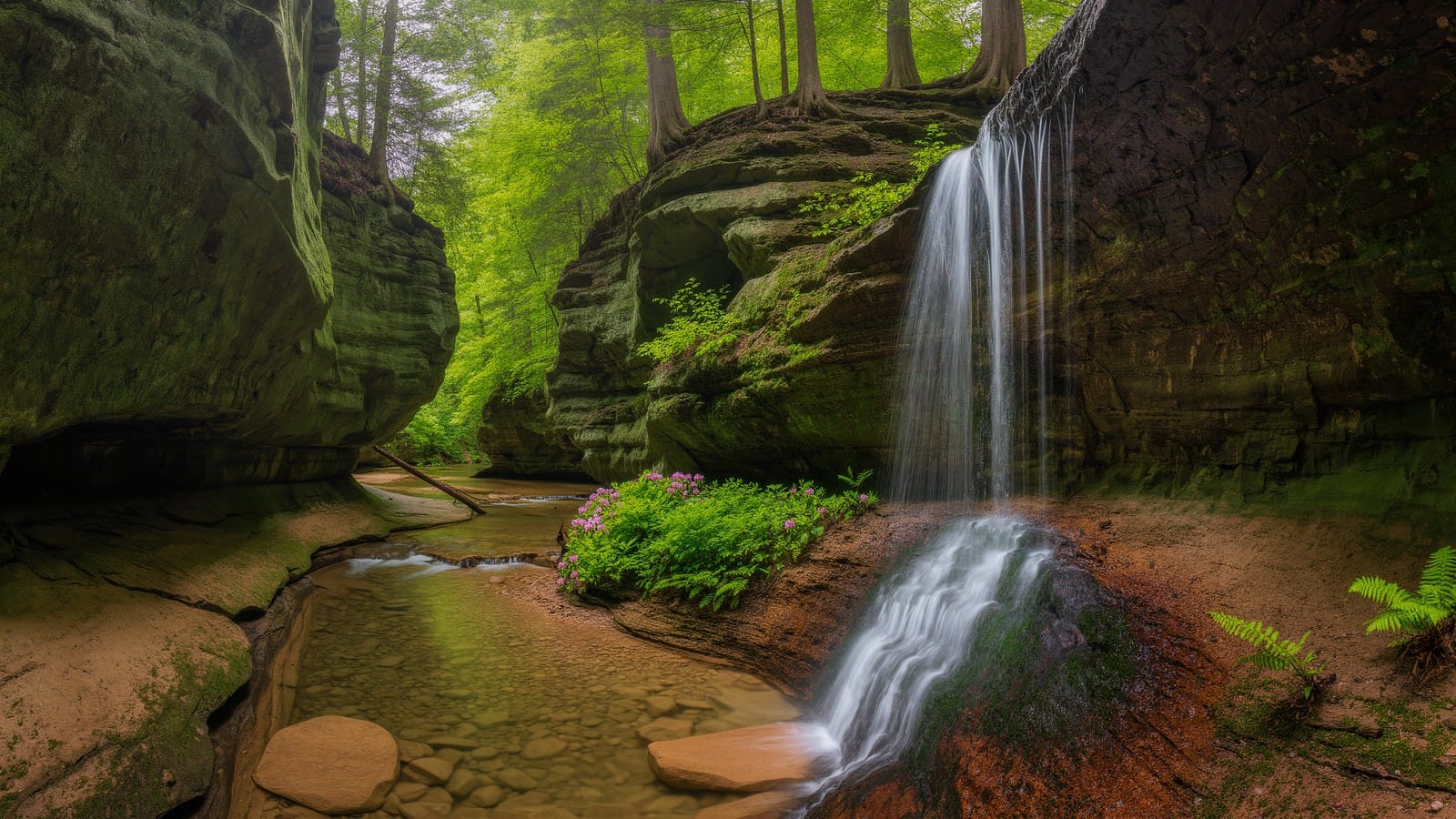
Lake Katharine State Nature Preserve: Hidden Gorges and Rare Magnolias
Lake Katharine State Nature Preserve in Jackson County hides two sandstone gorges, cool hemlock ravines, small waterfalls, and Ohio's rare bigleaf magnolias.
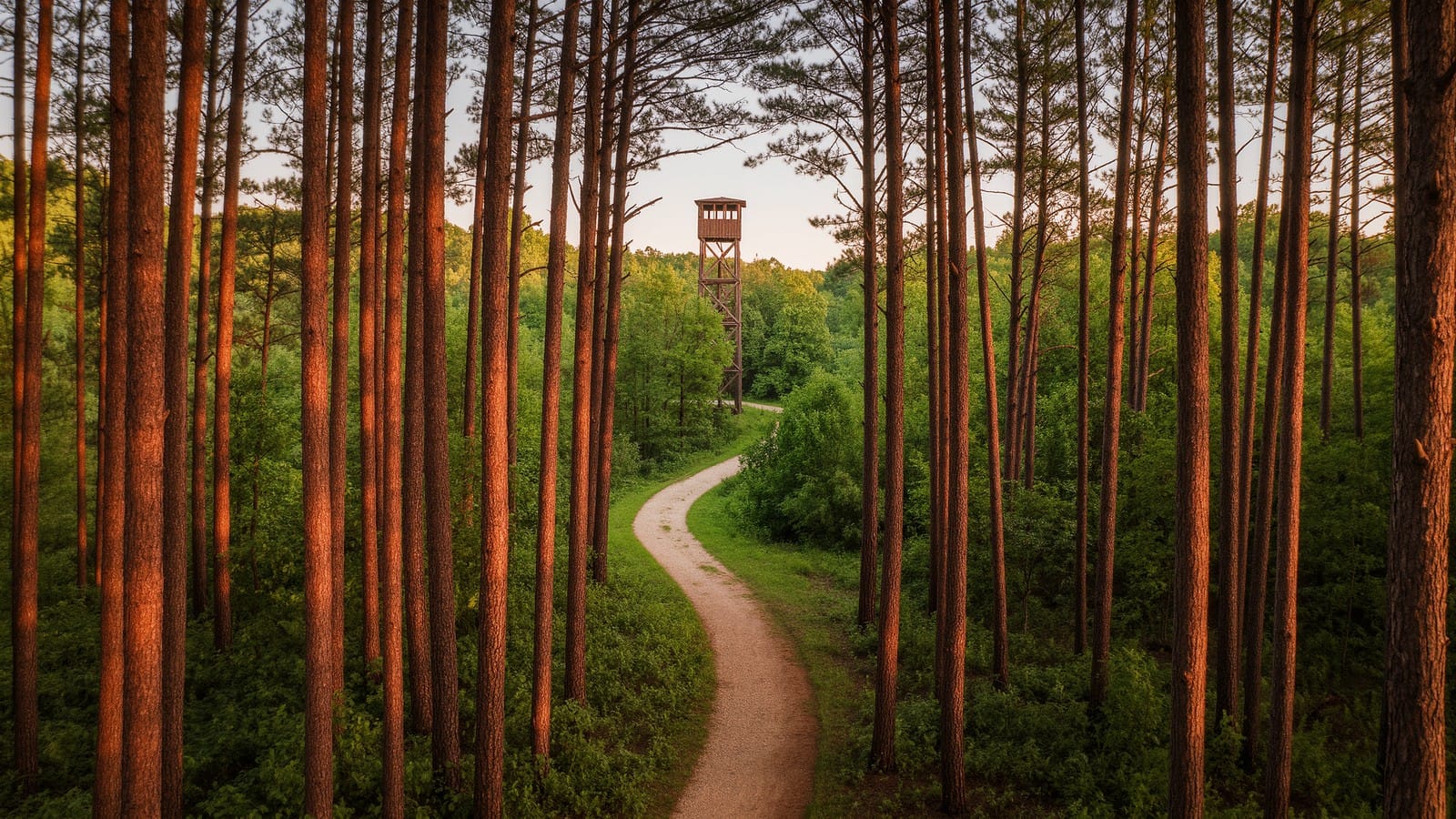
Tar Hollow State Park: Fire Tower Views and Remote Ridge Trails
Tar Hollow State Park is one of Ohio's most remote hikes: a climbable fire tower, the 15-mile Logan Trail, and miles of quiet ridge-and-hollow forest.
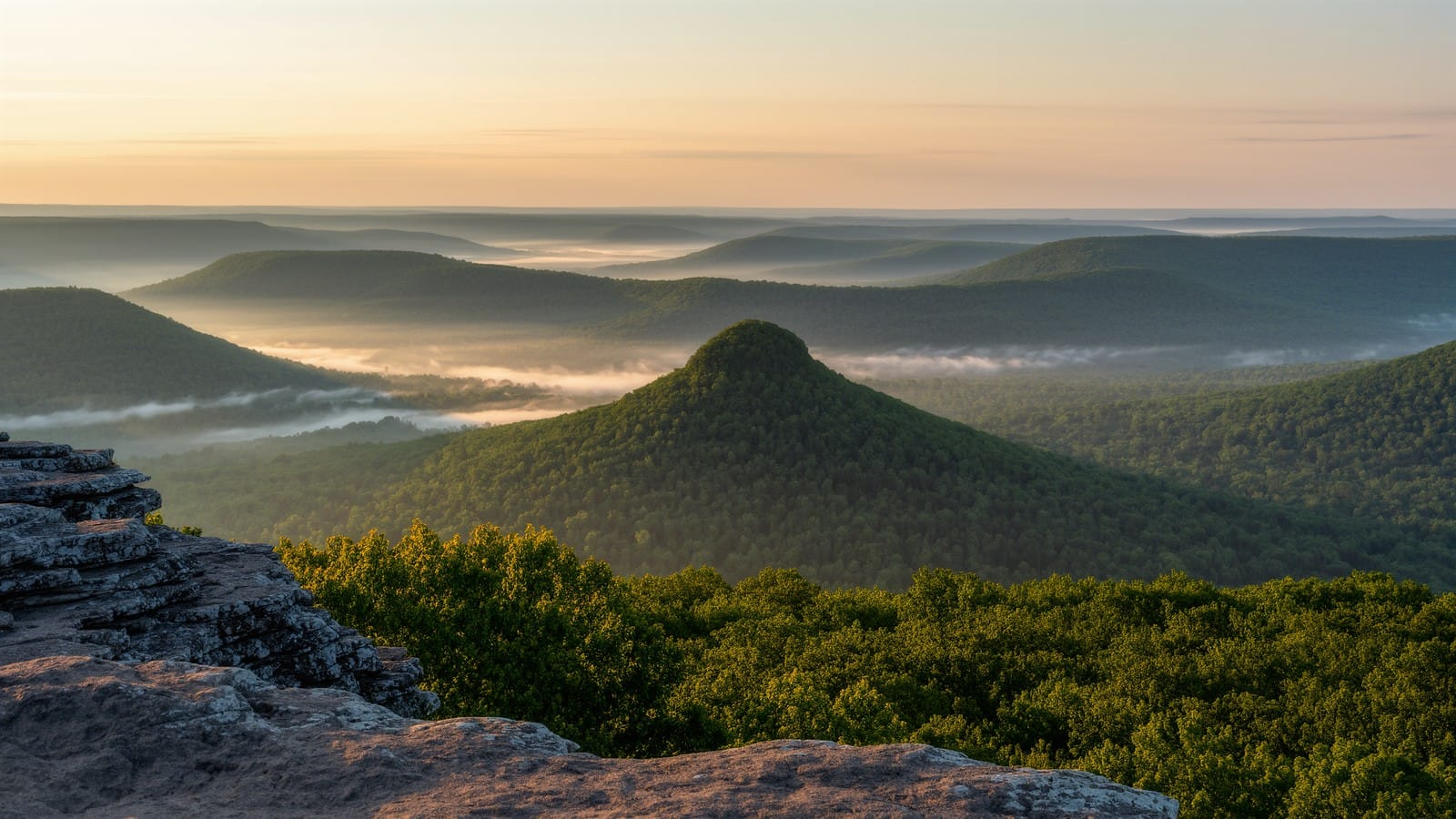
Great Seal State Park: The Rugged Hills That Inspired the Ohio State Seal
Great Seal State Park near Chillicothe hides Ohio's most rugged ridge hiking. Climb Sugarloaf Mountain to the view that inspired the state seal.