Lake Katharine State Nature Preserve: Hidden Gorges and Rare Magnolias
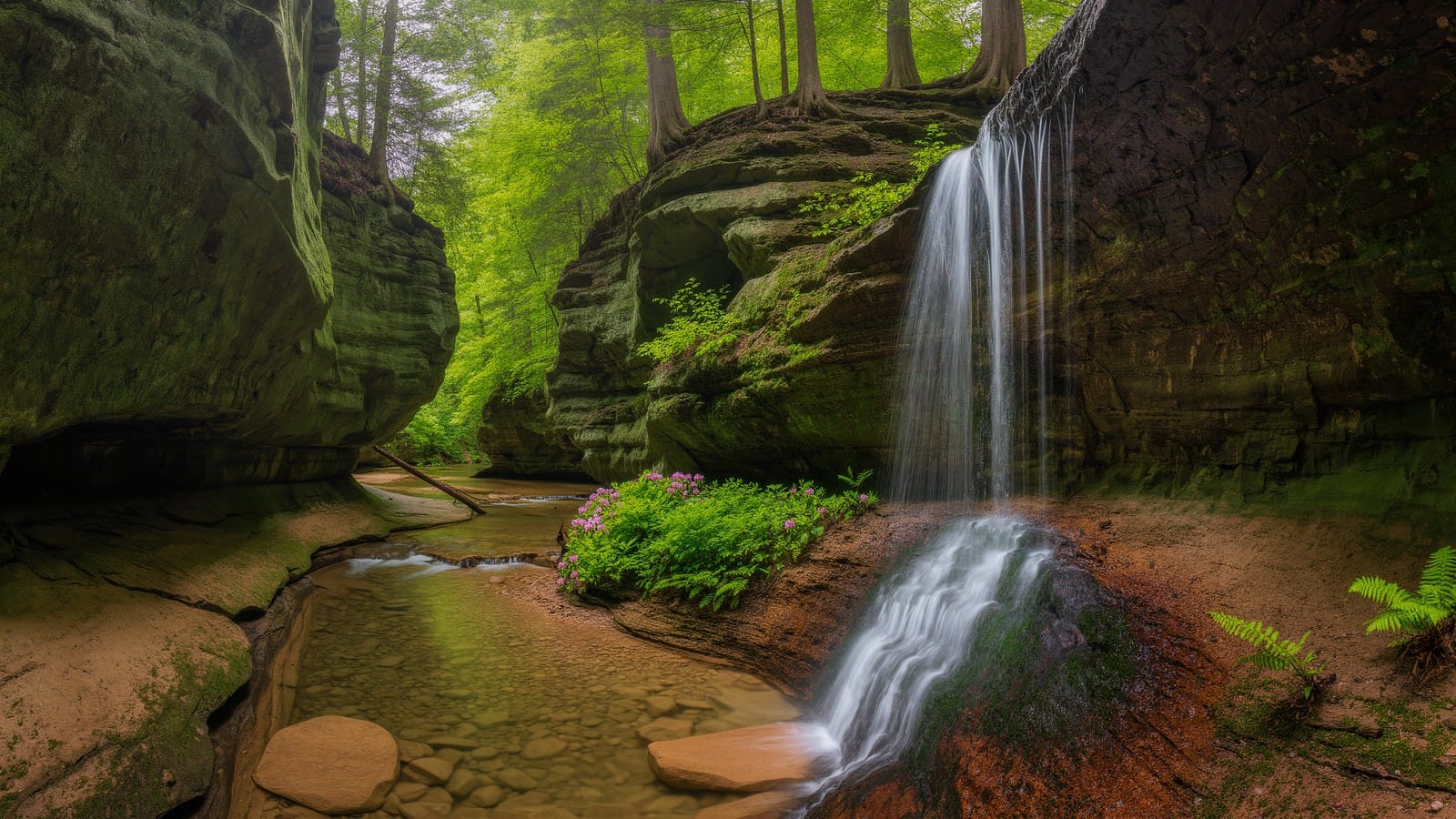
There's a stretch of the Salt Creek Trail at Lake Katharine where the temperature drops ten degrees the moment you step into the gorge. Hemlocks close overhead, the creek chatters over sandstone, and a thin waterfall slides down a mossy wall. On a hot Jackson County afternoon it feels like walking into a different climate — because, in a botanical sense, you are. Lake Katharine State Nature Preserve is one of those rare Ohio places where southern plants creep north into deep, cool ravines and hang on, and it's easily one of the most beautiful spots in the southern half of the state.
This is a dedicated state nature preserve, not a state park, and that distinction shapes the whole visit. Nearly two thousand acres of protected gorge, ridge, and lake, managed by Ohio's Division of Natural Areas and Preserves specifically to guard the rare species that live here. That means quieter trails, stricter rules, and a payoff of genuine wildness. You come to Lake Katharine to walk slowly, look closely, and see things you can't find anywhere else in Ohio.
The headline attractions are two deep sandstone gorges, a ninety-acre lake, and a pair of magnolias — the bigleaf and umbrella magnolias — that reach the very northern edge of their natural range right here. Add mountain laurel that blooms the whole ridge pink in June, and you've got a preserve that rewards every season with something different. Let me walk you through it.
Lake Katharine State Nature Preserve — Trail Snapshot
Location: Jackson County, just northwest of Jackson, Ohio
Trails: Calico Bush, Salt Creek, and Pine Ridge trails
Total distance: roughly 5–6 miles across the trail system
Difficulty: Moderate — gorge descents and rooty tread
Highlights: Sandstone gorges, hemlock ravines, small waterfalls, rare magnolias, mountain laurel
Best seasons: Spring wildflowers, June laurel bloom, fall color
Note: Dedicated nature preserve — stay on trails; pets are not permitted
Admission: Free (ODNR)
Getting There
Lake Katharine sits just a few miles northwest of the town of Jackson in southern Ohio, reached by State Route 85 and a couple of township roads that wind back to the preserve entrance. From Columbus it's about an hour and forty minutes south; from Chillicothe, closer to an hour. The final approach is rural back roads, so follow the ODNR signs carefully and don't fully trust your GPS on the last mile.
Parking is free but genuinely limited — this is a preserve, not a big state park, and the lot is small on purpose to keep visitation gentle. On peak spring and fall weekends it can fill by mid-morning, so arrive early. Because it's a nature preserve, the rules are stricter than a state park: stay on marked trails, take only photos, and leave the dog at home — pets aren't permitted here, which protects both the wildlife and the fragile plants. If you want to paddle or fish the lake, ODNR requires advance registration for that, so check their site before you go.
The Trail
Three trails make up the preserve's hiking system, and the good news is you can link them into one satisfying loop of around five miles or cherry-pick a shorter route.
The Calico Bush Trail is the one I always start with. "Calico bush" is the old country name for mountain laurel, and this ridge-running trail is lined with it. The path traces the high ground above the lake, giving you filtered water views through the trees, then dips toward the gorges. If you time your visit for June, the mountain laurel bursts into clouds of pink-and-white blossom along the whole ridge — it's one of the best laurel displays in Ohio and worth planning a trip around.
The Salt Creek Trail is the star. It drops off the ridge into the Salt Creek gorge, where the air cools and the world turns green and dim under towering eastern hemlocks. The creek winds over exposed sandstone, and small waterfalls spill from side ravines, especially after rain or during spring snowmelt. This is where you'll find the deep, mossy, fern-choked ravine scenery that makes Lake Katharine feel like a secret pocket of the Smoky Mountains transplanted into Appalachian Ohio. Take your time down here; there are quiet spots to sit by the water and just listen.
The Pine Ridge Trail is the shortest of the three, a gentler ridge walk through pine and oak that works well as a warm-up or an add-on if your legs have more in them. Together, the three trails deliver a full morning of hiking with real variety — ridge, gorge, lakeside, and back.
The terrain is moderate by Ohio standards. There's no summit to conquer, but the descents into and climbs out of the gorges are rooty, rocky, and can be slick where the hemlock shade keeps things damp year-round. Expect natural-surface trail throughout, a few footbridges over the creek, and some genuinely steep short pitches on the gorge sides. It's not a stroller trail, but a reasonably fit hiker in good boots will love every step.
One of my favorite things about Lake Katharine is how the lake itself sits quietly at the center of it all. Ninety acres of still water ringed by forest, no motorboats, no crowds along the shore — just the occasional paddler gliding past a heron. Even if you never launch a boat, catching a glimpse of that calm water through the trees from the Calico Bush ridge is a reward in itself.
If you do want to get on the water, the preserve allows limited paddling and fishing, but ODNR keeps it gentle on purpose — advance registration, no gas motors, and a cap on how many boats are out at once. That restraint is exactly why the lake stays so pristine. A slow morning paddle along the wooded shoreline, watching for herons and turtles and the occasional beaver sign, is one of the more peaceful ways to spend a few hours anywhere in southern Ohio. Just plan ahead, because you can't simply show up and launch on a whim here the way you can at a big state park.
Time your visit to the trail conditions, too. The gorge routes hold moisture year-round under all that hemlock shade, so even in a dry spell the rock stays a little greasy and the roots stay slick. I've watched more than one hiker in smooth-soled sneakers do an involuntary split on the descent into Salt Creek. Take the downhills slow, use your hands on the steeper pitches, and you'll be fine — the gorge is worth every careful step.
History & Nature
What makes Lake Katharine scientifically special is its plants. The cool, moist, north-facing sandstone gorges create a microclimate that lets southern Appalachian species survive far north of where they'd normally grow. The preserve protects Ohio's best populations of bigleaf magnolia and umbrella magnolia — two magnolias with enormous, tropical-looking leaves that reach the northern limit of their range in these ravines. Seeing a bigleaf magnolia leaf for the first time is startling; they can be well over a foot long, more like something from a rainforest than an Ohio woods. Late spring is when they leaf out and bloom, so a May or early-June visit shows them at their best.
The gorges themselves are cut from Black Hand sandstone, the same erosion-resistant rock that forms the famous cliffs and recess caves of the Hocking Hills to the north. Water working through joints in that sandstone over millennia carved the deep, narrow ravines you hike into, and the perpetual shade and moisture let eastern hemlock, Canada yew, and a lush community of ferns and mosses thrive in the depths. On the dry ridges above, it's a completely different world of oak, pine, and mountain laurel.
The preserve was dedicated in the 1970s specifically to protect this unusual concentration of rare plants and the pristine gorges that shelter them. That protective mission is why you'll see fewer amenities and stricter rules than at a typical state park — every choice here is made in favor of the ecosystem. The wildlife responds to that care: expect to see and hear plenty of birds, from wood thrushes singing in the ravines to hawks over the ridges, along with white-tailed deer and, if you're quiet, the occasional wild turkey.
It helps to know what you're looking at, because the plant list here is the whole point. Beyond the two rare magnolias, the gorges shelter Canada yew — a low, spreading evergreen that's uncommon in Ohio — along with wild hydrangea, partridgeberry, and a carpet of ferns that thrive in the cool damp. On the ridges, the mountain laurel shares space with blueberry and huckleberry in the acidic sandstone soil. Bring a field guide or a plant-ID app and give yourself permission to hike slowly; Lake Katharine rewards the hiker who stops to look more than the one racing for mileage. Half the magic here is at knee level and below.
Tips & Seasonal Notes
Spring is the peak experience. April and May bring wildflowers to the gorge floors and leaf-out on the magnolias, and June turns the ridges pink with mountain laurel. Fall is gorgeous too, with the mixed forest coloring up and the hemlock gorges staying deep green as a backdrop. Summer is very pleasant precisely because those shaded ravines stay cool — a Salt Creek descent on a muggy July morning is one of the more refreshing hikes in the state. Winter is quiet and stark, with the hemlocks holding their green while everything else goes bare.
Practical notes: wear boots with good grip, because the gorge trails stay damp and the roots and rocks get slick. Bring water and a snack, since there are no concessions out here. Remember the preserve rules — stay on the trails to protect the fragile plants, pack out everything, and leave pets at home. And go early on nice weekends to beat the small-lot crowd. Above all, slow down. Lake Katharine isn't a place to power through for mileage; it's a place to notice the giant magnolia leaves, the waterfall you can hear before you see, and the ten-degree hush of the gorge.
If you're a photographer, the gorges reward patience and the right light. Midday sun blows out the contrast between the bright rim and the shadowed floor, but early morning and late afternoon bathe the hemlock ravines in soft, even light that shows off the moss, the water, and those enormous magnolia leaves. Overcast days are secretly the best of all down in the gorge — the clouds act like a giant diffuser, and the greens go rich and saturated. Bring a small tripod if you want to catch the little waterfalls with any silk to them, since it's genuinely dim under the canopy.
Nearby Trails
Southern Ohio is loaded with good hiking around Lake Katharine. Right in Jackson County, Leo Petroglyph & Nature Preserve pairs ancient Native American rock carvings with a short gorge trail — an easy add-on to the same day trip. Just west, Lake Hope State Park offers a quiet forest lake and 1850s iron-furnace ruins deep in Zaleski country, and the sprawling Zaleski State Forest backpacking loop is close by for a bigger day. For more sandstone gorges and waterfalls, the Hocking Hills trails are an hour north, and if you're chasing cascades, my roundup of Ohio's best waterfall hikes has more ideas.
🥾 Gear for the gorges
The perpetually damp gorge trails are where traction matters most. I hike Lake Katharine in grippy waterproof hiking boots and bring trekking poles for the slick creek descents. A compact pair of binoculars is worth its weight for the birds and those enormous magnolia leaves up in the canopy. See my full Ohio day-hike gear checklist for the rest. As an Amazon Associate, this site earns from qualifying purchases.
Lake Katharine is the preserve I send people to when they want to see something they didn't know grew in Ohio. Descend into the Salt Creek gorge, stand under a magnolia leaf the size of a dinner platter, and feel that cool air roll off the creek. It's proof that some of the wildest corners of this state are hiding in plain sight down south.
More in
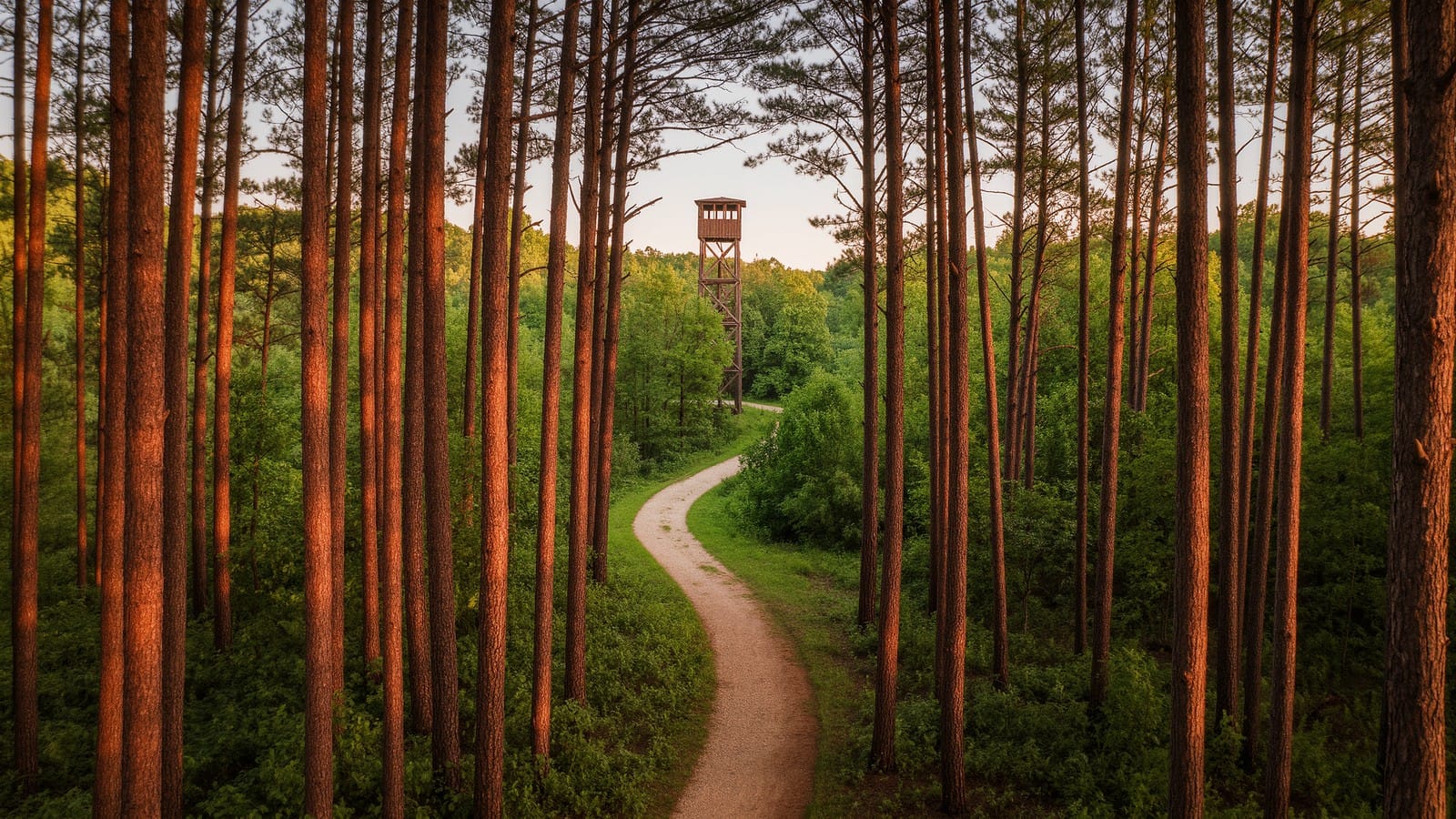
Tar Hollow State Park: Fire Tower Views and Remote Ridge Trails
Tar Hollow State Park is one of Ohio's most remote hikes: a climbable fire tower, the 15-mile Logan Trail, and miles of quiet ridge-and-hollow forest.
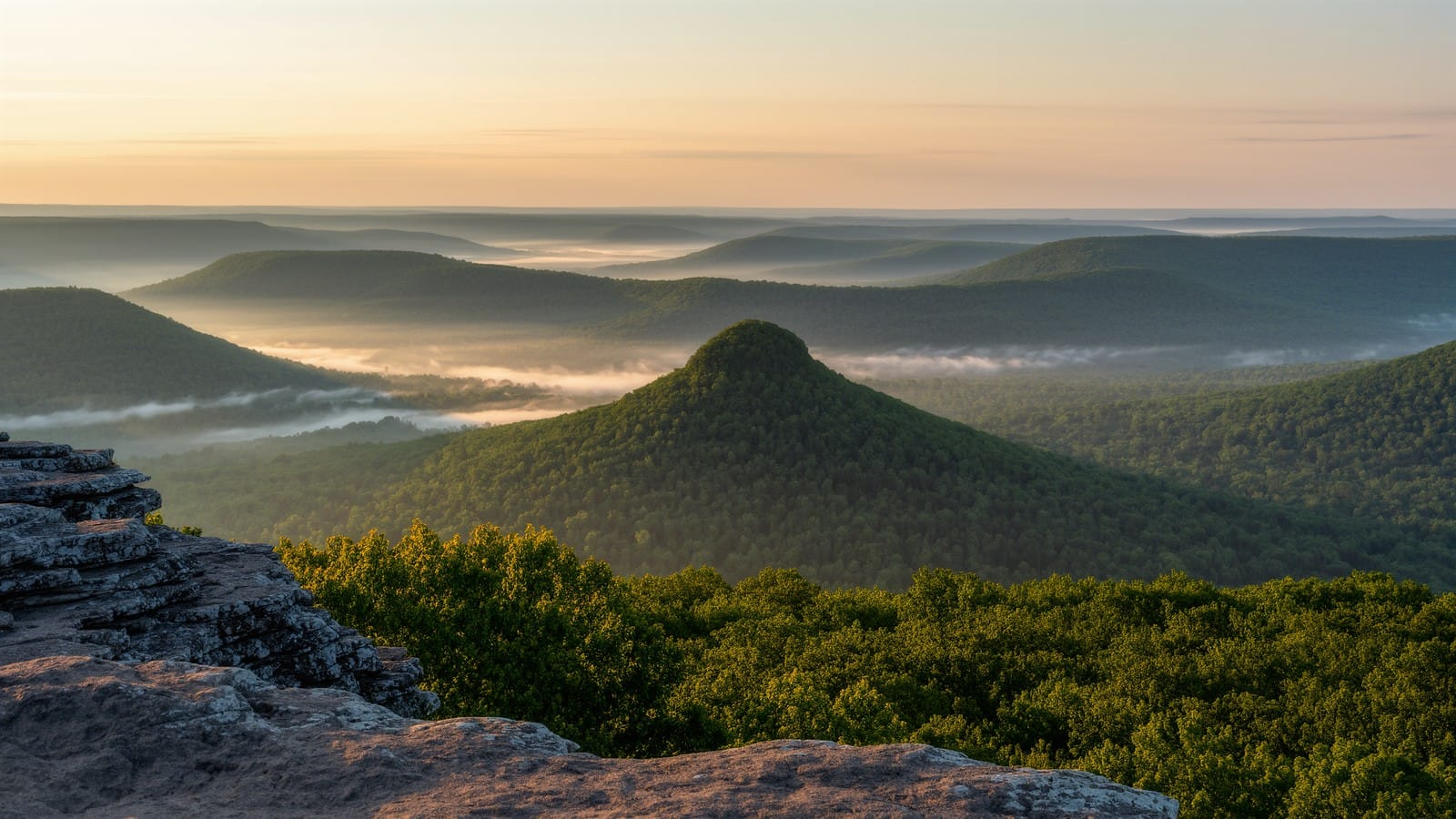
Great Seal State Park: The Rugged Hills That Inspired the Ohio State Seal
Great Seal State Park near Chillicothe hides Ohio's most rugged ridge hiking. Climb Sugarloaf Mountain to the view that inspired the state seal.
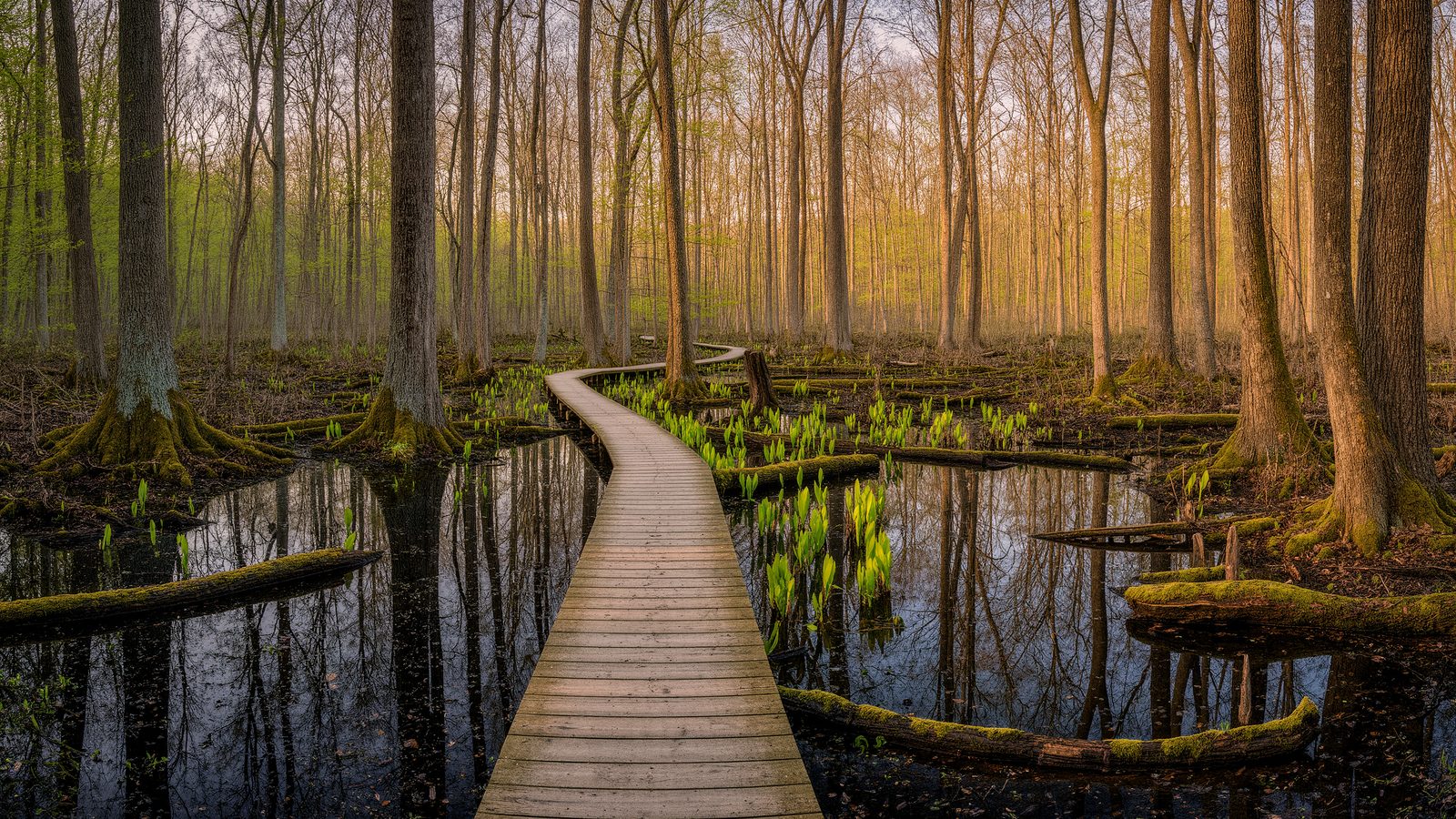
Gahanna Woods State Nature Preserve: A Quiet Swamp Forest Loop
A guide to Gahanna Woods State Nature Preserve near Columbus, Ohio — spring vernal pools, buttonbush swamps, boardwalk trails, and rare wildflowers.