Hueston Woods State Park: Old-Growth & Fossil Trail Guide
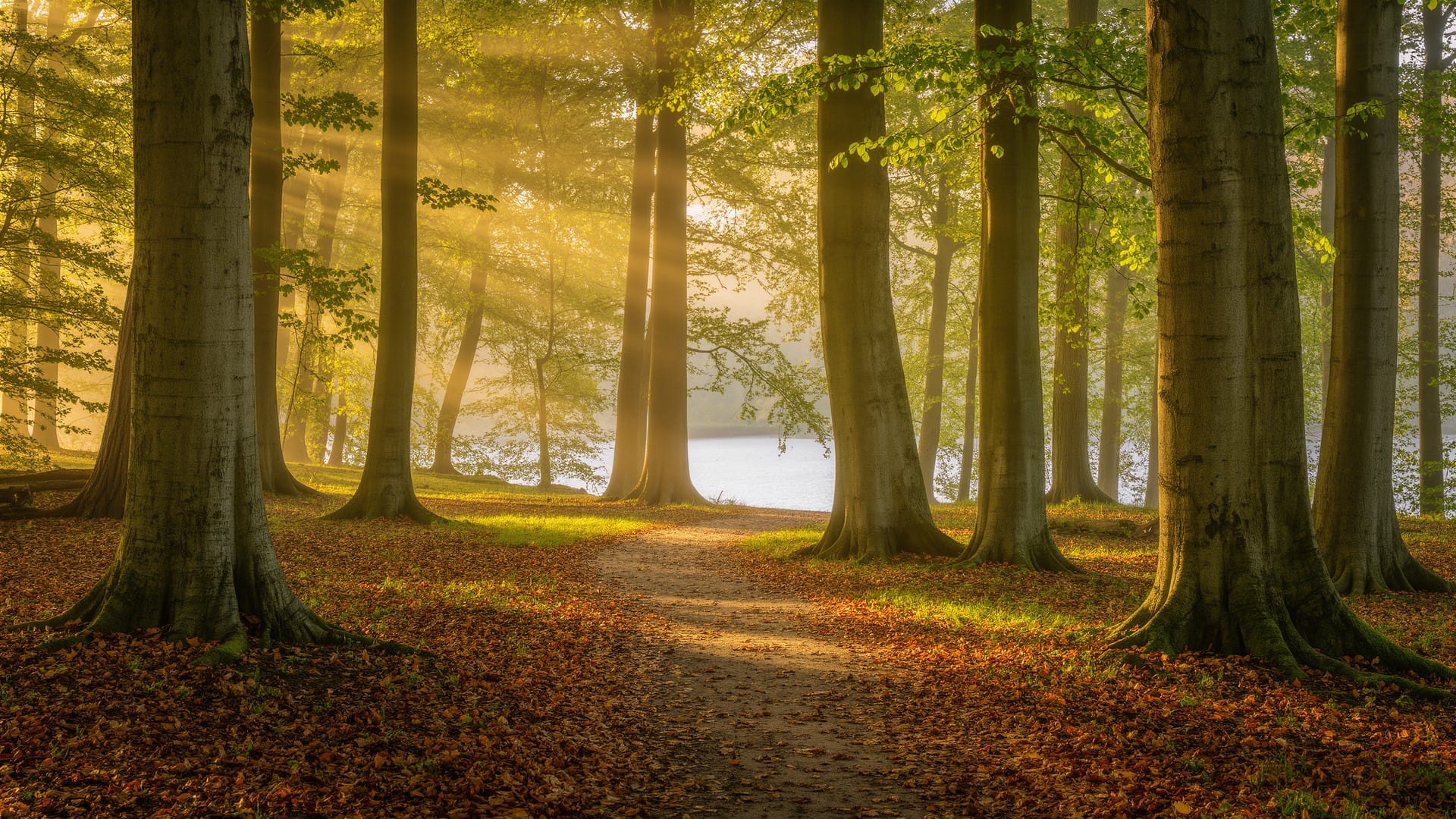
There's a stand of trees near Oxford, Ohio that has never been logged. Not once. Not by the Huestons who farmed around it for four generations, not by the state that bought it in 1941, not by anybody. Walk into the old-growth core of Hueston Woods on a hot afternoon and the temperature drops a real, measurable few degrees the moment the canopy closes over you. The beeches are enormous, smooth and gray as elephant skin. The light comes down green and broken. I stood in there last summer with my hand on a tree that was probably old when Ohio became a state, and I'll be honest — I didn't say anything for a while.
Hueston Woods is one of those Ohio parks that quietly out-punches its reputation. Most people in Columbus drive right past it on the way to somewhere flashier. But this is a 3,000-acre state park wrapped around a lake, with a 200-acre National Natural Landmark old-growth forest at its heart, some of the best fossil hunting in the Midwest, and forty-plus miles of trails. It's about an hour and a half southwest of Columbus, near Oxford, and it makes one of the best summer day trips in the state.
Trail at a Glance — Hueston Woods State Park
- Distance: 40+ miles of trails; the marquee loops run 1 to 3 miles
- Difficulty: Easy to moderate — gentle terrain, some roots near the lake
- Best season: Summer for shade and fossils; spring for wildflowers
- Dogs: Leashed dogs welcome on trails
- Highlights: Old-growth forest, fossil hunting, Acton Lake, covered bridge
- Location: Near Oxford, Butler and Preble counties, Ohio
Getting there and where to start
Hueston Woods sits about five miles northeast of Oxford, which puts it roughly 90 minutes from Columbus, 45 from Dayton or Cincinnati. Wikipedia lists the park at 2,936 acres (often rounded to nearly 3,000), including the 625-acre lake (as of September 2026). Admission is free, like all Ohio state parks. Park office: 6301 Park Office Road, College Corner, OH 45003; phone (513) 523-6347. Confirm hours and alerts on the ODNR Hueston Woods page (property page intermittently 404'd from this runner — re-check at Ghost push). The best home base is the nature center, which has live animals, a raptor rehab area, and — this is the part kids lose their minds over — fossil displays and regular fossil hunts. Park there and you're within striking distance of the old-growth trails and the lakeshore both.
If you're making a day of it, the resort lodge, marina, campground, and an 18-hole golf course are all on site, so you can hike in the morning, swim in the afternoon, and sleep there if you don't feel like driving home. There's even a full paintball field, which I did not expect from a state park and have not yet worked up the nerve to try.
The trails
The trail network here is genuinely big — over forty miles when you count everything — but the hikes most people come for are short, shady loops in the old-growth core. The named trails you'll see on the map include Cedar Falls, Sycamore, Pine Loop, Mud Lick, West Shore, and Sugar Bush, plus connectors like Hedgerow, Maple Grove, and the Acton Lake trails. A long-distance route, the American Discovery Trail, also threads through the park if you want to chain things together.
For a first visit, I'd point you at the old-growth. The Sugar Bush and Big Woods area trails wind through that 200-acre climax forest of beech and sugar maple — the stand that earned National Natural Landmark status back in 1967. The trails are mostly flat and easy, the footing is soft, and the canopy is so complete that even in July it feels like walking through a cool green cathedral. Go slow. Look up. The big trees here are the whole reason this park exists.
Cedar Falls is the short walk to the park's modest waterfall — not a Hocking Hills cascade, but a pretty seasonal drop that runs best after rain. Down along Acton Lake, the West Shore and shoreline trails give you water views, more sun, and good odds on herons and turtles. The terrain near the lake gets a little rootier and rolls a bit, but nothing here is hard. This is a park where a family with young kids and a retiree with trekking poles are both perfectly at home.
What "old growth" actually means
We throw the phrase "old-growth forest" around a lot, so it's worth slowing down on what it really means, because Hueston Woods is one of the only places in Ohio you can stand inside the real thing.
When European settlers arrived, most of Ohio was covered in forest like this. Then almost all of it got cut — for farms, for timber, for towns. By some estimates, less than one percent of Ohio's original forest survived. The 200-acre core at Hueston Woods is a piece of that one percent: a beech-maple climax forest that reached its mature, self-sustaining balance centuries ago and was simply never logged. That's why the National Park Service designated it a National Natural Landmark back in 1967.
The difference is something you feel before you can explain it. The trees are bigger than you're used to — beeches and sugar maples three and four feet across, their trunks running straight up before the first branch. The canopy is so complete that the forest floor stays cool and open and shaded, carpeted with ferns and spring wildflowers instead of the tangled brush you get in younger woods. There are standing dead trees and big fallen logs left to rot, which look messy until you realize they're the whole point — that decay is what feeds the next four hundred years. It's a forest doing what a forest does when nobody interferes, and there's almost nowhere else in the state to witness it.
I tell people to walk these trails slowly and quietly, the way you'd move through an old library. Touch a beech. Look for the woodpecker holes. Listen. This is the closest most of us will ever get to seeing the Ohio that existed before the plows.
The fossils are the secret
Here's the thing almost nobody tells you about Hueston Woods: you can take fossils home. Legally. Encouraged, even.
The bedrock here is Ordovician limestone and shale, laid down when this whole part of Ohio sat at the bottom of a warm, shallow sea something like 450 million years ago. That sea was crawling with life, and the rock is absolutely packed with the evidence — brachiopods, bryozoans, horn corals, snails, and if you're lucky, the curled-up shapes of trilobites. The park has designated fossil-collecting areas, and the nature center runs fossil hunts where a naturalist shows you what you're looking at. Bring an empty egg carton and a little patience, and your kids will fill it in twenty minutes.
I'm a hiker first and a rock nerd a distant second, but I've never left Hueston Woods without pocketing a brachiopod or two. There's something genuinely humbling about holding a 450-million-year-old animal you picked up off a creek bank in Butler County. It reframes the whole hike.
A lake, a covered bridge, and some history
The water at the center of all this is Acton Lake, a 625-acre reservoir formed in 1956 when the state dammed Four Mile Creek. It's named for Cloyd Acton, the Preble County legislator who talked Ohio into buying the Hueston land in the first place. ODNR allows boats of any motor size on Acton Lake but restricts speed to no wake (as of September 2026) — which keeps the lake quiet and friendly for kayaks, canoes, and lazy pontoon afternoons rather than roaring ski runs. There's a swimming beach, a marina, and plenty of bank fishing.
The history of the place is worth knowing. The state bought the Hueston farmland in 1941 and ran it for years as a state forest, even using part of it as a prison honor camp in the 1950s before the lake went in and it was redesignated a state park. Just outside the park, the Hueston Woods Covered Bridge — a 108-foot Burr-arch span over Four Mile Creek, finished in 2012 — is a photogenic stop, and the mid-1800s Doty Homestead brick farmhouse nearby runs as a small history museum. If you've got history buffs in the car, you can stitch a real afternoon out of it.
For birders, the mix of mature forest, lake, and meadow pulls in over 200 recorded species — migrating songbirds through the old-growth in spring and fall, waterfowl on Acton Lake in the colder months. The park has long been known for nesting bald eagles around the lake, and the nature center's raptor rehabilitation program means you can often get a close look at owls, hawks, and eagles that can't be released back to the wild. It's one of the better places in southwest Ohio to introduce a kid to birds of prey without a long drive or a pair of high-powered binoculars.
How I'd spend a summer day here
If you've never been and you want a plan, here's the one I'd hand you. Start at the nature center mid-morning, before the heat builds. Catch a fossil program if one's running, or just grab a trail map and ask the staff where the collecting areas are. Then walk the old-growth loops while the air is still cool under that big canopy — give yourself an hour to really be in it, not just pass through.
By early afternoon, head down to a designated fossil-collecting area near the lake or a creek bank and let everybody hunt. Twenty minutes in, somebody will shout because they found a horn coral, and the next forty minutes will disappear. Pocket your finds, then cool off at the Acton Lake beach or rent a kayak from the marina — the no-wake rule keeps the water calm and pleasant for paddling. If there's time left, drive out to the Hueston Woods Covered Bridge for a few photos, or swing by the Doty Homestead if the history museum's open.
That's a full, varied day for a family or a couple of friends, and you've barely scratched the park's forty-plus miles of trails. It's the kind of place that quietly justifies a return trip before you've even left.
Tips and seasonal notes
- Summer is the move. That old-growth canopy makes Hueston Woods one of the most comfortable hot-weather hikes in the state — real shade, cooler air, and the lake right there when you want to cool off.
- Bring something to carry fossils. An egg carton, a zip bag, anything. You'll want it. Collect only in the designated areas, and check the current nature-center rules.
- Watch the lake-edge roots. The shoreline trails are easy but rooty in spots. Decent shoes beat flip-flops.
- Make it an overnight. With a lodge, cabins, and a campground on site, Hueston Woods rewards a slower visit. Hike, swim, hunt fossils, repeat.
- Spring for wildflowers, fall for color. The beech-maple forest puts on a show in both shoulder seasons if you can swing a return trip.
Why it's worth the drive
Ohio has bigger waterfalls and more dramatic gorges, and I've written about plenty of them. What Hueston Woods has is something rarer and quieter: a piece of forest that nobody ever cut, sitting on top of a sea floor full of ancient animals, wrapped around a calm lake where the boats can't go fast. It's a park that rewards curiosity more than it rewards mileage.
I've hauled friends out here who grumbled about the drive and then spent forty-five minutes hunched over a creek bank arguing about whether they'd found a trilobite. That's the Hueston Woods effect. You come for a hike and leave with a pocket full of 450-million-year-old shells and a new appreciation for trees older than the country. Pack the egg carton. Bring the kids. Make a day of it.
🥾
Nearby trails to explore
- John Bryan State Park and Clifton Gorge: limestone gorge near Yellow Springs
- Caesar Creek State Park: more fossils and big lake trails
- Best Hikes Near Dayton, Ohio: trails and day trips
- Best Hikes Near Cincinnati, Ohio: trails and day trips
- Ohio Waterfall Hikes: seven best trails to chase cascades
More in
Lake Hope State Park: Iron Furnace Ruins and Deep Forest
Lake Hope State Park in remote Vinton County: a quiet forest lake, the 1850s Hope Furnace ruins, a ghost town, dark night skies, and legendary Ohio fall color.

Shawnee State Park: Ohio's Little Smokies Hiking Guide
Shawnee State Park near Portsmouth, Ohio's Little Smokies: Appalachian ridge hikes, two swimming lakes, and the toughest backpacking trail in the state.